Friends with Benefits: Filling in the Gaps of my visit to AP (Part One)

(Obviously we meet innumerable people in our travels, not all of whom get directly mentioned, but their thoughts, their help, shall always be remembered. I wanted to make a special mention of some.)

Ethnography comes with its perks as well and one of those major bonuses is friendship. Apart from our interlocutors (for me the doll-makers) there are many unforgettable faces I befriended along the way. It is not serious all the time. Big or small, rich or poor, every person I have met in my lonesome travels has become a friend. The big hearts that people seem to have all around the smallest of villages never fails to baffle me. My parents being their usual careful selves had warned me not to trust anyone as I was a single female travelling alone. My best friends cautioned me about the young men who may predate upon my single self. I too experienced at least two unfortunate encounters that spoke to the fears of my well-wishers. But far from the maddening crowd, there have been people I could trust and people who opened their hearts and towns up to me asking for nothing in return and for this I feel blessed and fortunate. Instead of sleazy men, I found helpful young and old men and women who showed me the way, took me to the right spots, and answered my weird questions about places and things. They happily relinquished their stereotype to share this journey with me.
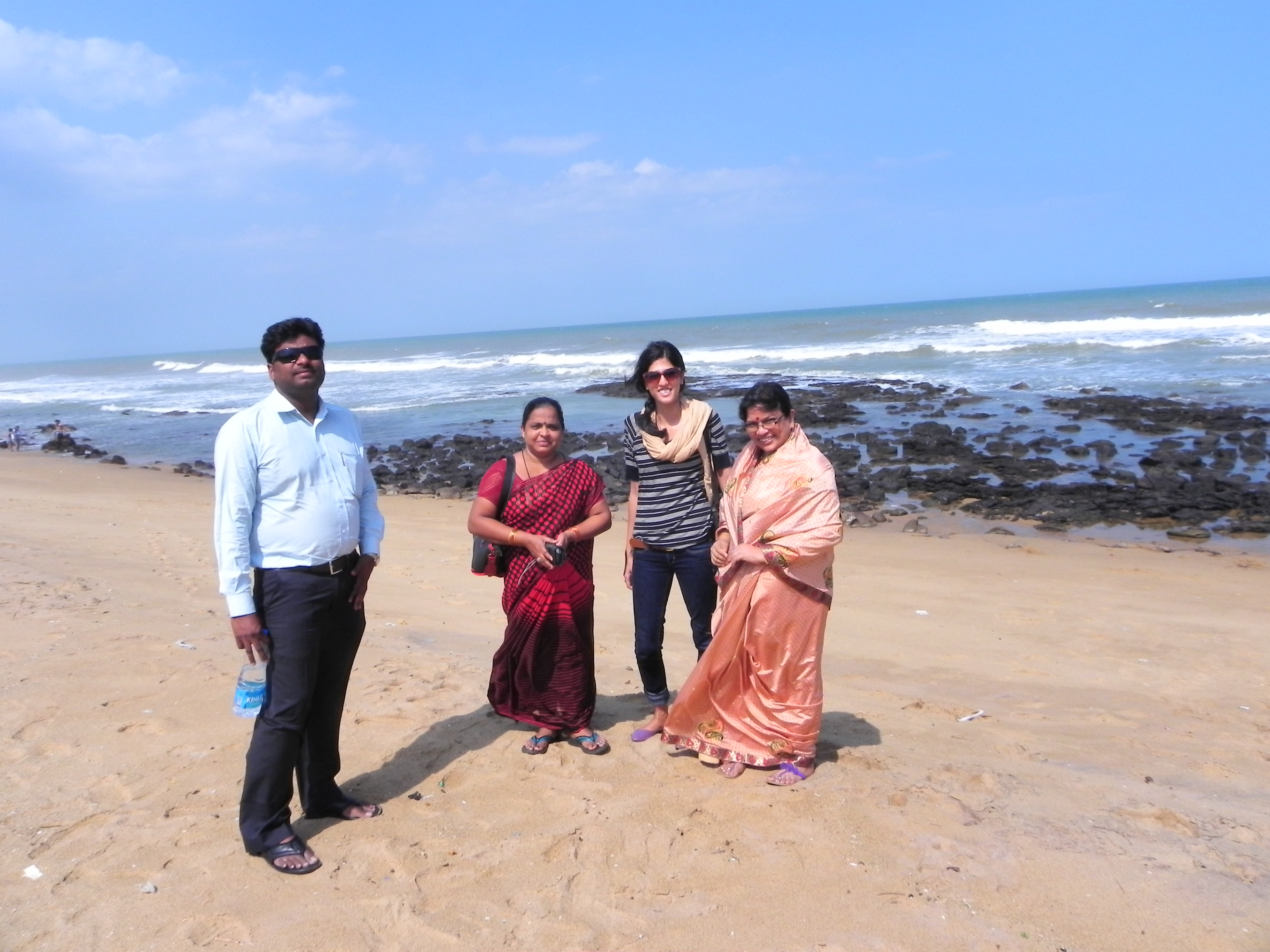
To them I have to dedicate this post. As I left the state of Andhra Pradesh (AP) two weeks ago back to my home turf of Chennai, I left with a heavy heart and many memories of spicy food, hot sweaty bus rides, and gaily colored temples, churches and mosques. AP was vastly new territory for me. I have conducted fieldwork in India before and I have travelled to several major cities in India but AP, its towns, its language, its food, and its people were new to me. I even recall an earlier post where I mentioned that temple customs were different and locals didn’t hesitate to tell me do things differently in a shrine. Something I wasn’t used to people telling me a Hindu was how to act in a Temple, where I thought I was comfortable doing my own routine. This was my first lesson and I learned it at the Kalahasti Temple near Tirupati, an early visit on my journey up north. Among the many things I learned, I also learned about AP and its brand of friendship – a kind of tough love!

My first friends came from SVUniversity at Tirupati where Professors retired and current came to visit me and tell me the things they knew about dolls. The candid honesty about the doll-makers prepared me for the wealth of obstacles I would face before I could find even one doll-maker or someone willing to tell me about them. It was here too that I had my first plate of Chilly Paneer for this trip, an Indian-Chinese delicacy, must try if you like fried spicy cottage cheese.
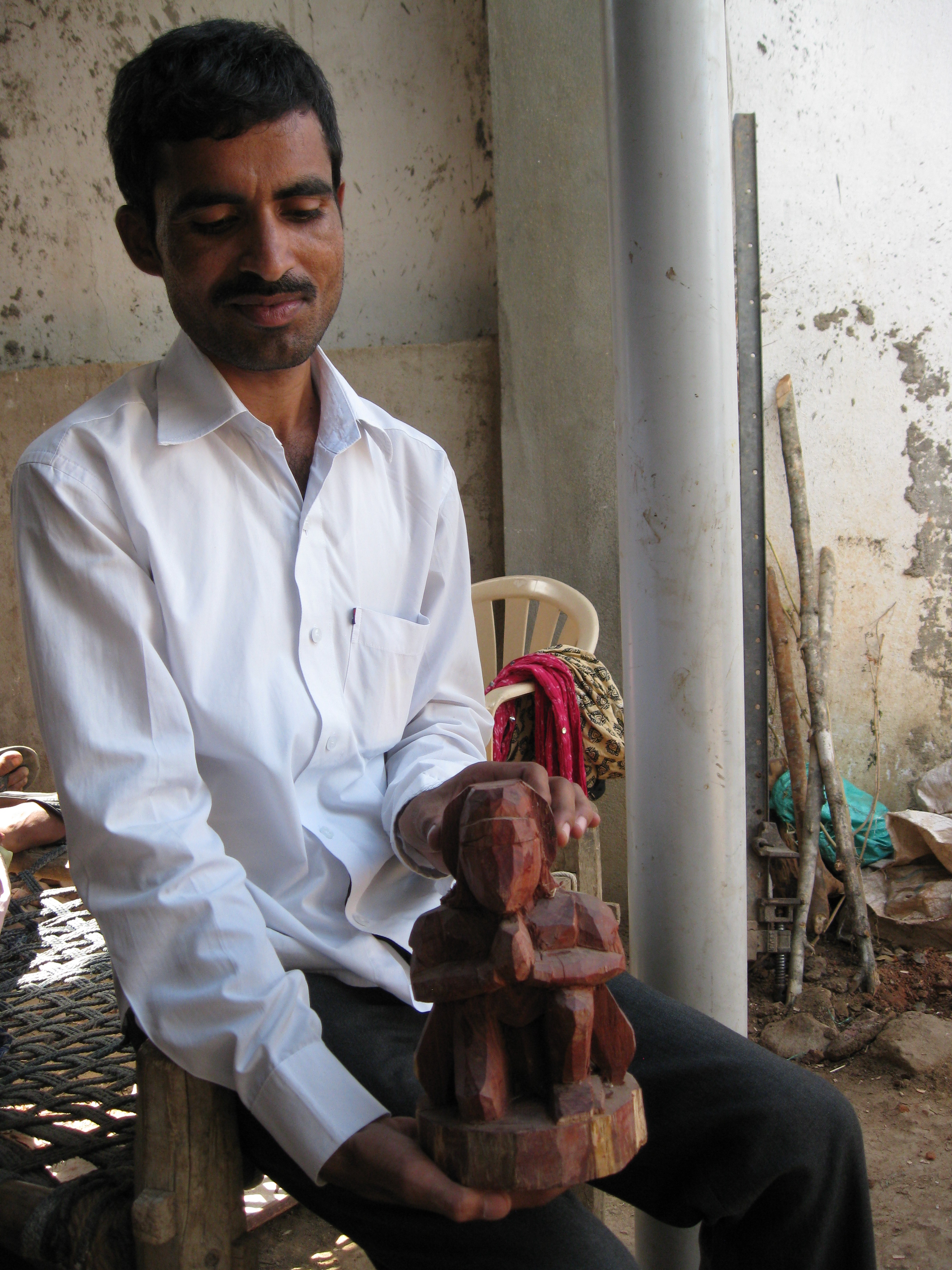
I met my first fieldwork assistant as well in Tirupati, Thinappa, a man with a golden heart. Thinappa, a Telegu speaking student at the university had graciously accepted to join me on my travels to the local villages and help me navigate the various people and their towns. Frankly only one doll maker didn’t speak a word of Tamil and that’s where I required Thinappa’s help the most. But along the way, in our broken tongues – between Telegu, Tamil, and English – we became good friends and I learned about how sociologists in India do their work in a very relevant place, where everything they study matters to the world they live in directly. Here in western academia, we bring non-Indian voices and priorities to the forefront of our analyses of India’s problems, but in Thinappa’s classroom, every data that was collected fed directly back into the system. He researches the re-association of juvenile delinquents in Tirupati’s jails back into society. His hometown, several districts away was struggling to curtail the repeat offences of juvenile delinquents.

In Vizag, I met a different kind of crew. My loyalties were divided between Prasanna Ma’am, a local English professor and Tribal studies expert and her family and friends, and my serviced hotel folks and their local driver cum guide. Both taught me invaluable things about AP’s landscape, its people, and their values. I wrote about Prasanna Ma’am in an earlier post but I didn’t mention my guide Vijay who took me to the most picturesque spots of Vizag and temples nestled away in hill tops with spectacular beaches. I didn’t miss Hawaii for even a moment.
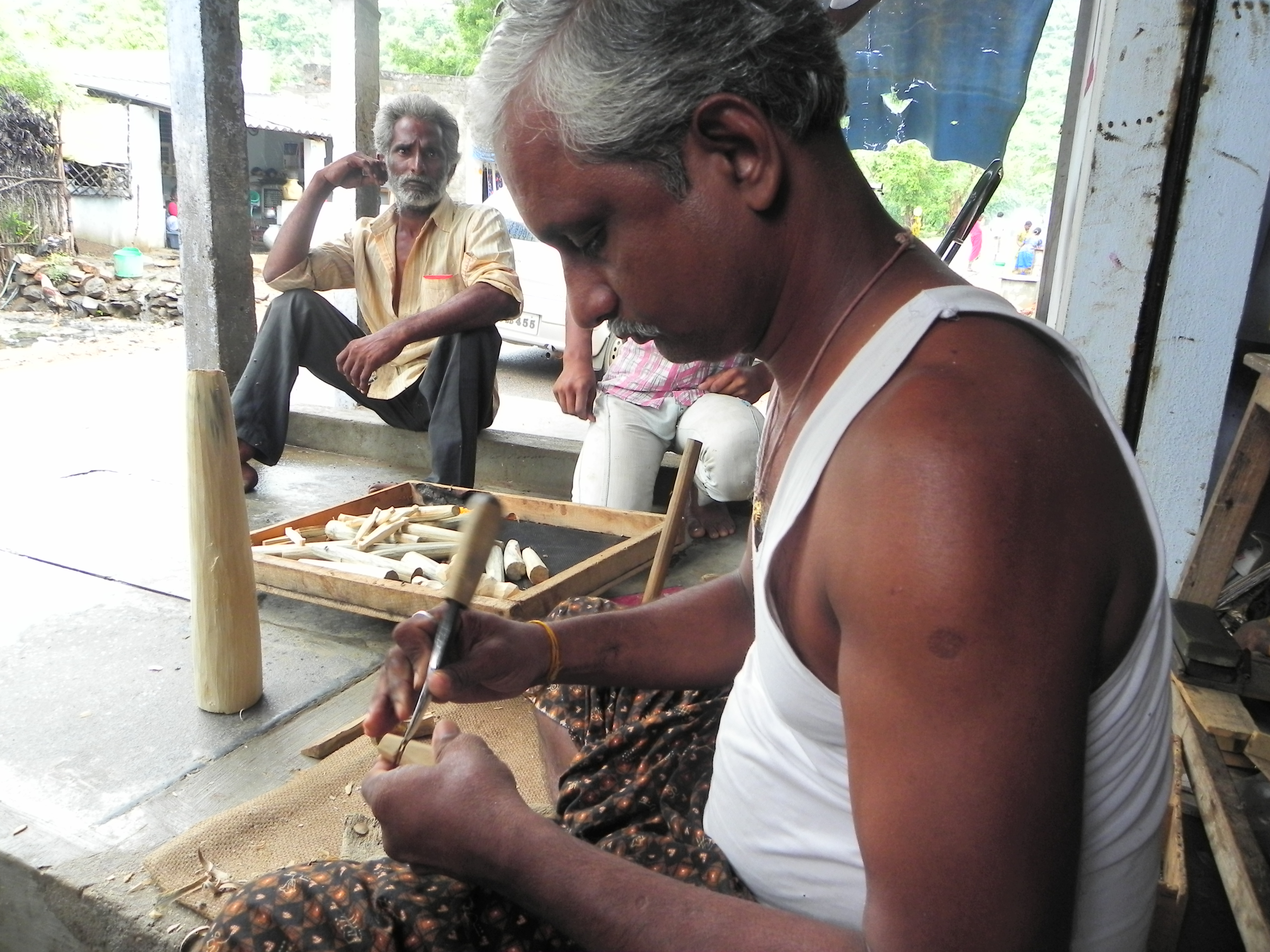
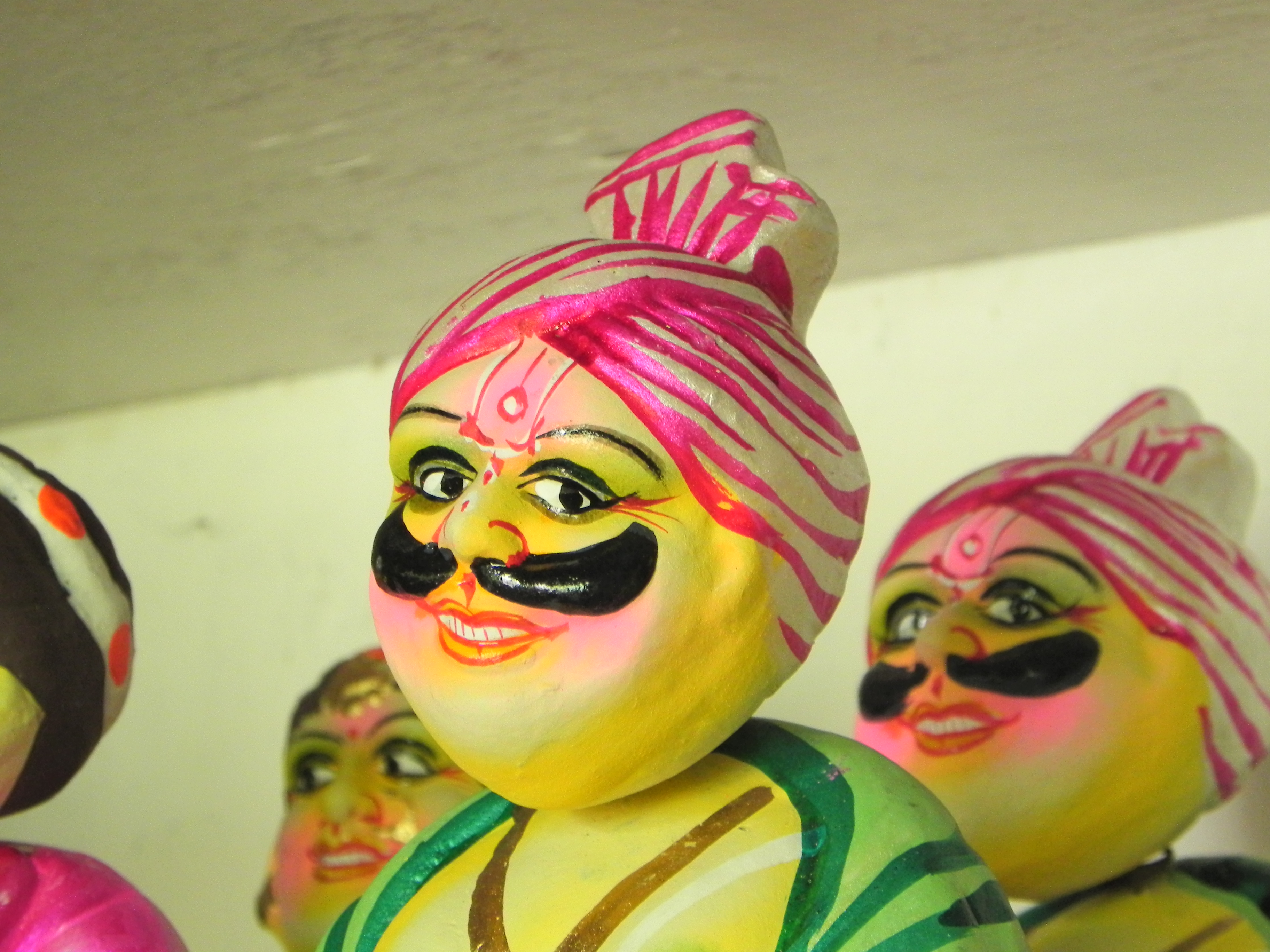
Displaying our choices

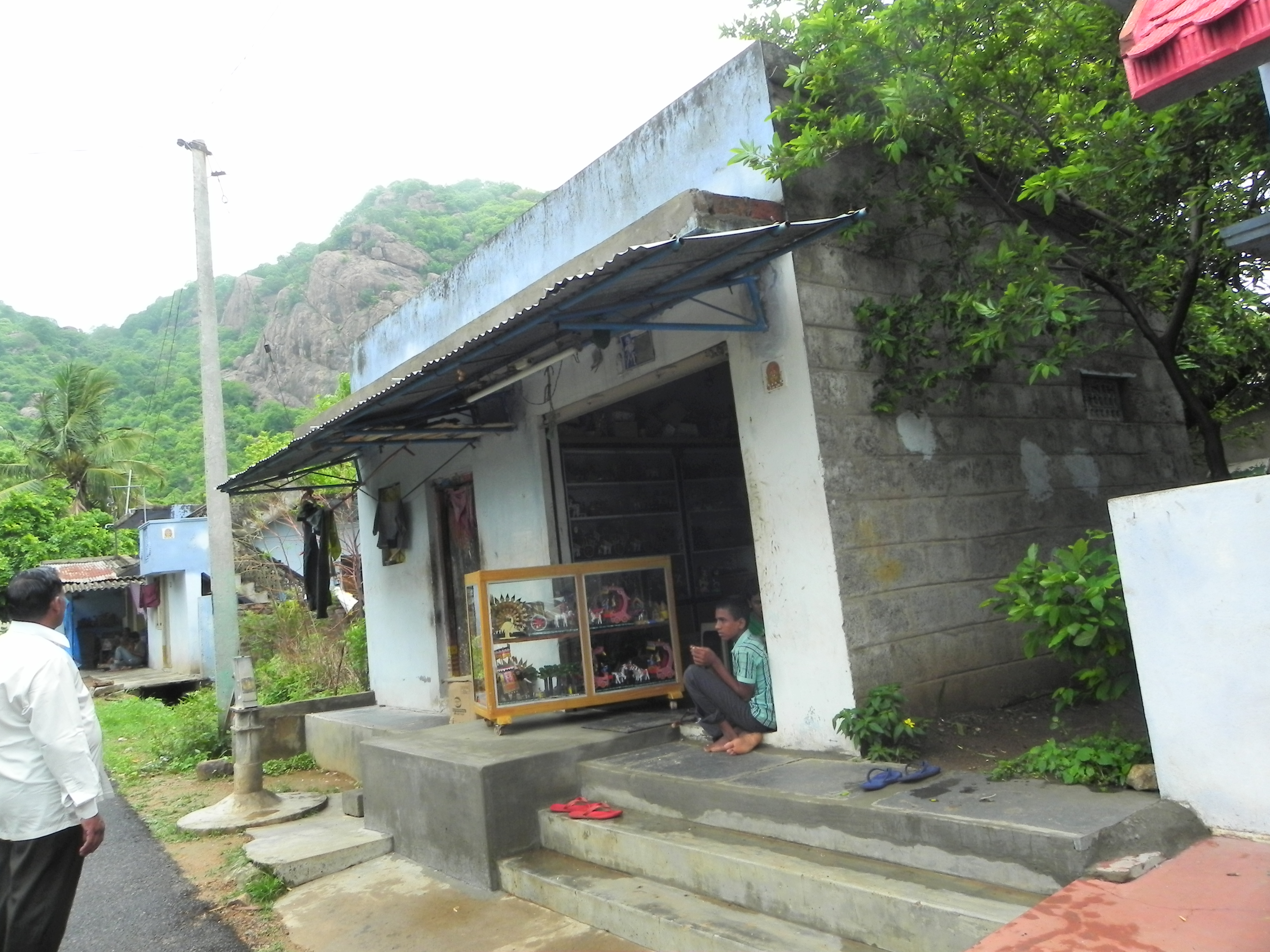
The Kondapalle artisans were starkly different from the Thathacharis of the villages surrounding Tirupati. Though the Indian government has recognized some of the Kondapalle toy maker’s efforts and started two schools for skill training, a lot of these artists told me a different story. They loved their professions and had chosen them voluntarily. This gave them a sense of pride and dignity for their occupation. Most were not following a tradition passed down from their fathers. Gopal Rao, a forty five year old doll maker told me, “My family has traditionally been farmers, we till the land. I love making these dolls, and I chose this out of my interest. I couldn’t work another day without doing something that made me happy.” However, he still wanted to pass on this craft to his children and all those who wish to learn. He told me a story of his Achari doll-making teacher from Kondapalle. About thirty years ago, he fought with his father to visit this doll-maker and eventually ended up becoming his pupil along with five neighborhood boys. Today he still maintains great reverence for that teacher and values his decision to go against his father’s wishes. He does add, “My parents were right, there is no money in making dolls. But, I love what I do and it isn’t about the money. We are able to get by comfortably.”

Another difference between the Kondapalle and Tirupati doll makers was that they allowed women to participate in the task of evaluating and painting dolls. Women in Tirupati Thathachari’s homes were not allowed to do the rough task of chipping and shaping wood. Here too in Kondapalle, men take the bulk of the sculpting work. They shape the wood, which is easily malleable by hand, and craft beautiful features, designs, and dioramas. Their wives step in to finish the job they have begun. Women paint these dolls. Gopal’s wife especially loves to paint dolls and her eyes light up when she describes the care she takes to finish each image her husband has begun. The paints used are mostly natural dyes from local flowers and berries that I saw, but some chemical paints are used for larger designs to protect the pieces and make them last longer.

Bhanumati is shy though, and didn’t wish to be photographed and rewarded for her efforts. She claimed that Gopal did all the major work. But I wondered how she could take a task such as painting the face of the doll so simply, when after all that is what gives beauty and finality to an image? Gopal stepped in here to voice his own pride for his wife’s work. “Bahnumati does the real work – she carefully proportions and paints the eyes and the torso, the most prominent parts of the dolls. Her hand is so good that it doesn’t make errors.”

Like the Tirupati doll makers, nothing can go to waste here in Kondapalle. No material, no paint, no chip of poniki wood, however cheap can be treated lightly. The doll making street is hidden in a picturesque valley overlooking the large hill ranges that made Kondapalle a famous martial center for the reigning Kings of the East. In earlier times, dolls were made to replicate the natural world. Bullock carts, village rituals, and King’s processions are quite famous images from Kondapalle. However today the market demands anything and everything be recreated for display. The doll makers are aware of this and gingerly respond that they will custom make any images desired by the huge Emporium owners of Tirupathi/ Andhra Pradesh.

I also asked them about Bommai Golu and what they knew about how their dolls are used in people’s homes. Most of them were aware of the large displays of Golu held by temples/ exhibition halls but none thought of it as a domestic ritual. While the women of Kondapalle may appear different than their Brahmin counterparts in Andhra Pradesh or even Tamilnadu, their fascination for dolls remains constant. The alankaram (adornment) is what defines how far the owner or creator cherishes her creation. While the Kondapalle women perform their own Golu, where they conscientiously paint and display their dolls for people to purchase; Brahmin women too carefully choose these dolls and decorate their homes for a public display. Each one wants their creativity to be showcased, their creation and its’ alankaram to be noticed.

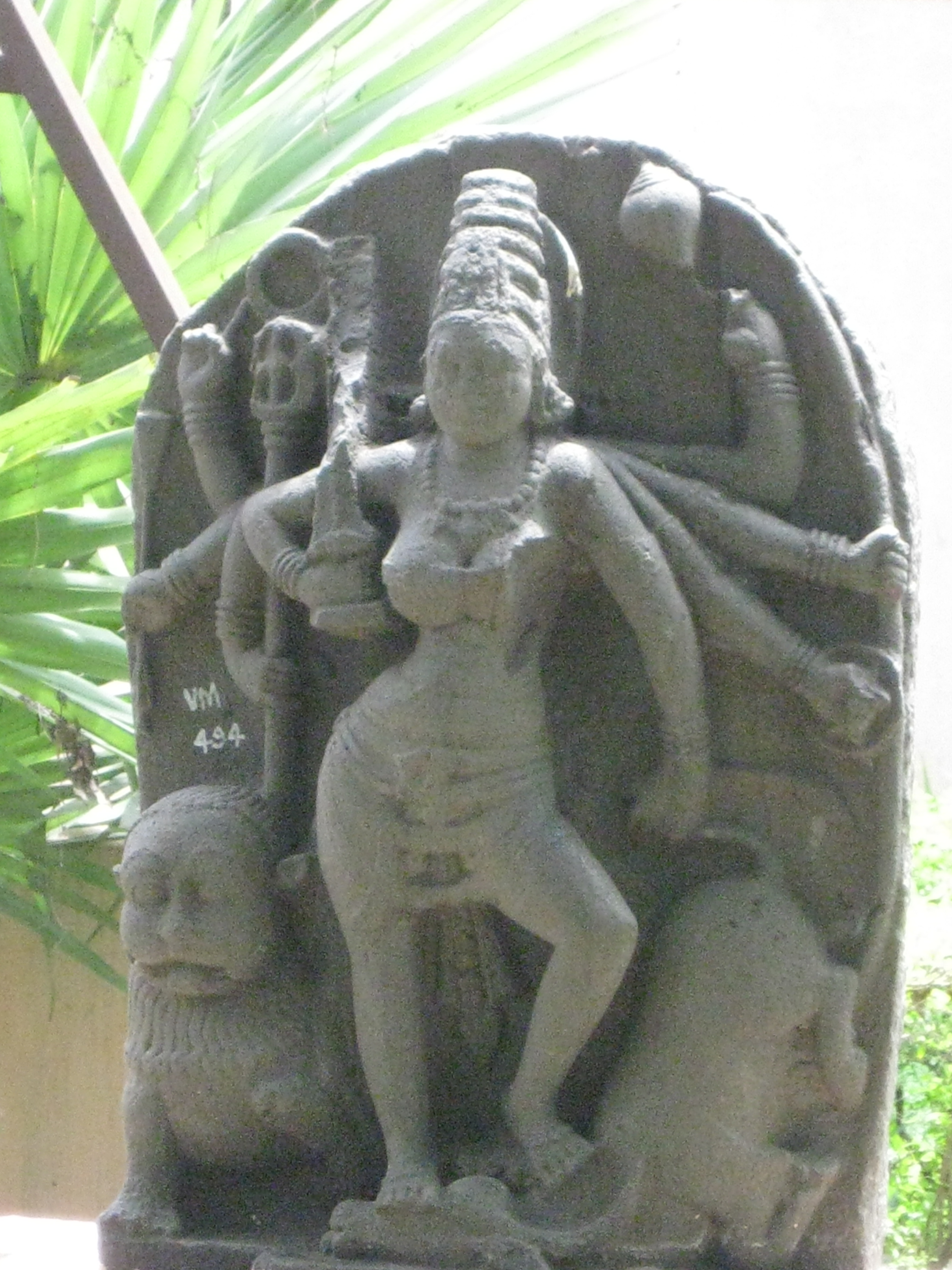
mahishasuramardini kshetra

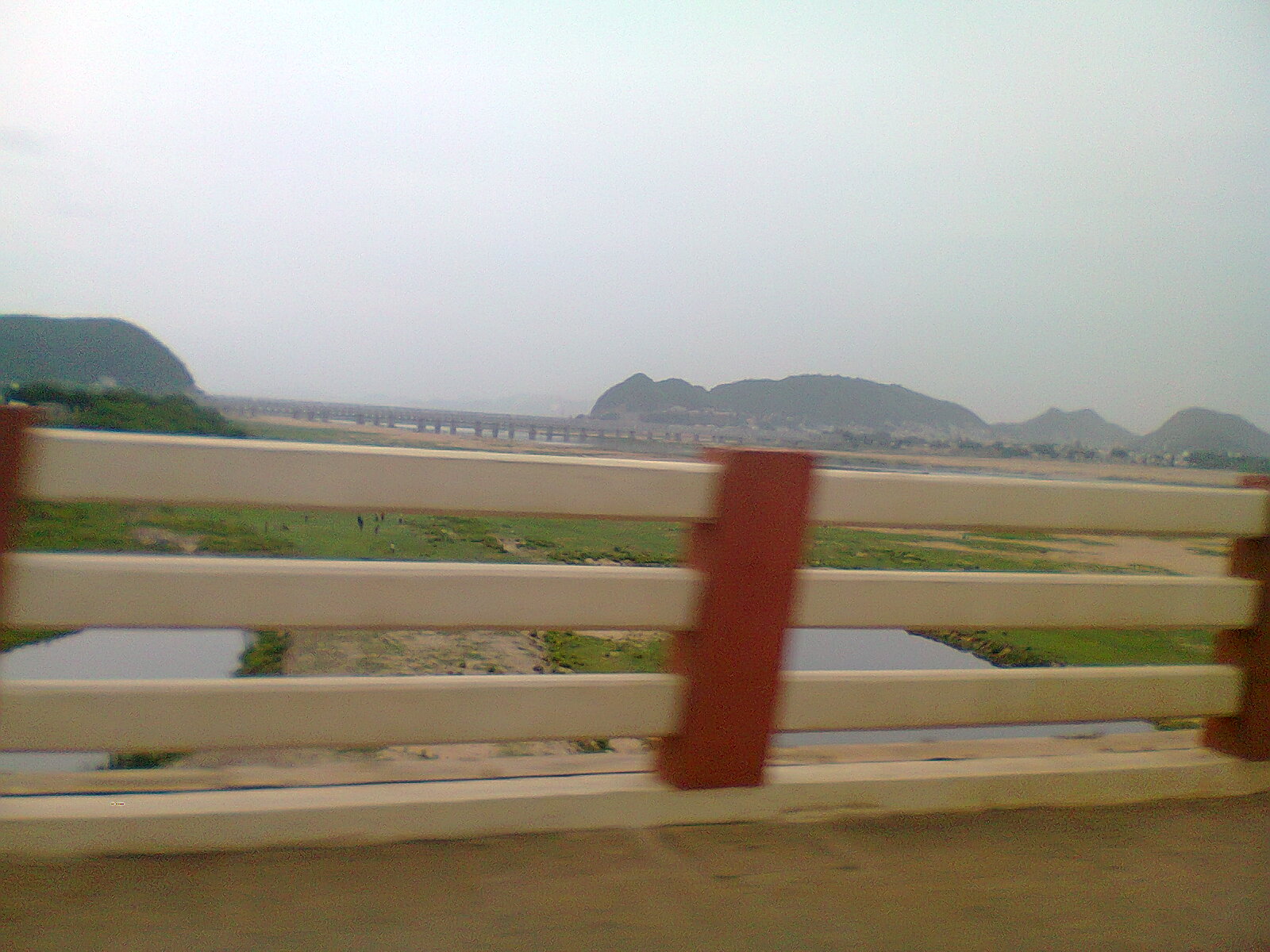
After my supposed detour in Vizag, I did arrive at the real destination I was headed for – Vijayawada (one of the many cities in India named after “vijaya” or “victory” to commemorate the establishment of a kingship or its’ capital). I had selected Vijayawada for its proximity to Kondapalle, the city known for making martial toys and village landscapes. But Vijayawada had a lot more to offer than just dolls. The city is divided between the two sides of the bank of river Krishna. Connecting the two banks are two roadways and flanking the northern roadway is a large hill range upon which Kanakadurgamma’s temple is situated. Known for her immense strength in vanquishing demons, Mahisasuramardini (the slayer of the buffalo demon Mahisha), I can see why the goddess chose to live in this city. It is beautiful city, situated in a valley with plenty of rainfall, the goddess and her forms are everywhere. The city is covered with paddy fields, displaying the abundance of the fertile soil of the Krishna River. Not only the goddess or Hindu Kings, but every empire that has controlled India has left a mark in Vijayawada – the most prominent being – Buddhist, Hindu, and British owing to the famous Buddhist caves, the Durga temple, and a large St.Mary’s church upon the hilltop. As my driver told me in Hindi “everyone comes to our earth and leaves their mark upon it”.

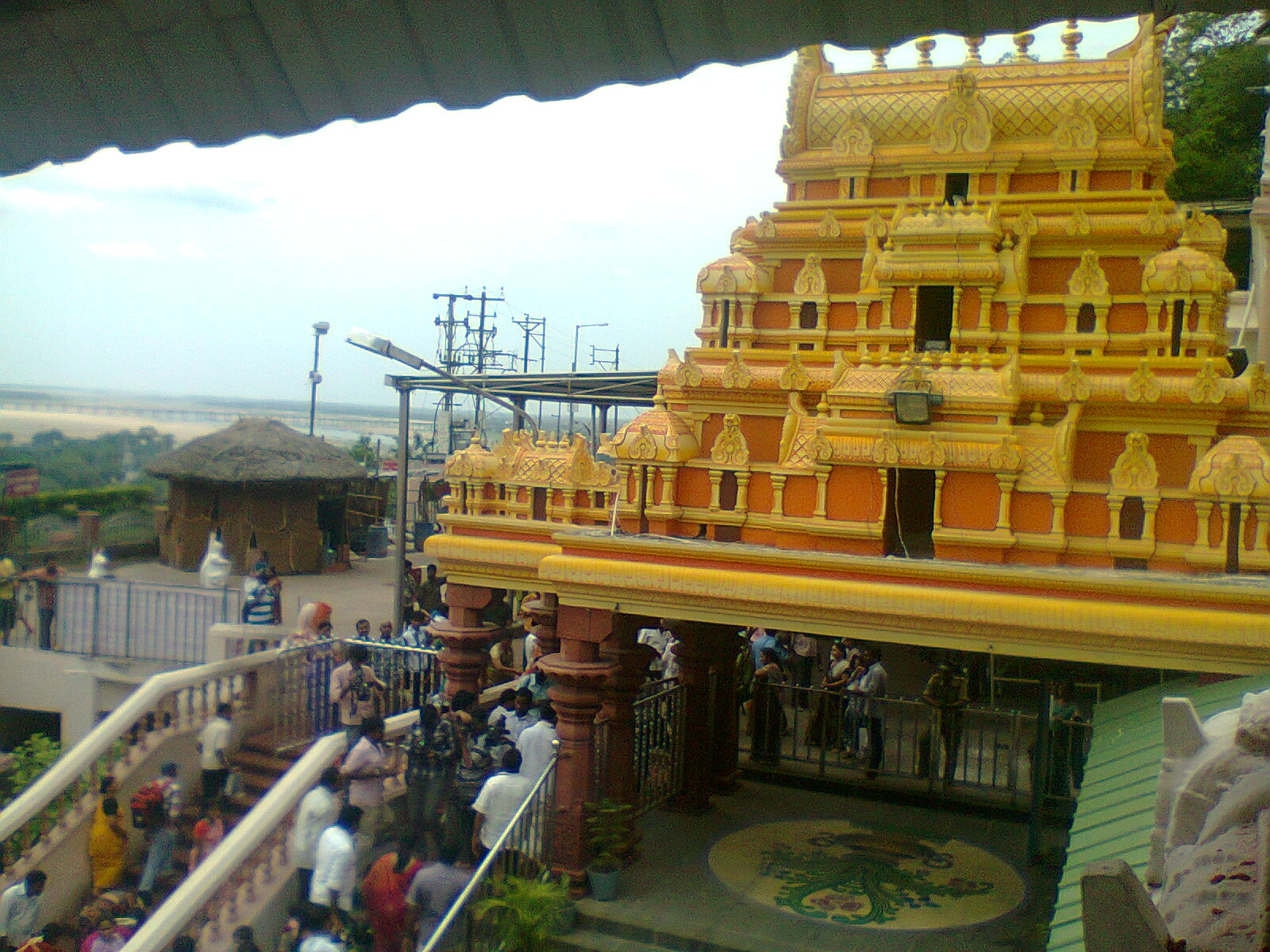
Visiting Kanakadurgamma was no simple task; two bus rides and one short hike later, you find yourself at the entrance to a grand temple situated in the hills. From below all you can see at the top, is no temple tower, but a large “aum” symbol in glowing light with a large upside down trident symbolic of the goddess. Luckily I had arrived rather early. During my bus ride I had befriended a north-Indian family who was coming to visit the goddess thanking her for the birth of their baby girl, they had waited five years to conceive. According to the mother, if they got a baby, they were supposed to make a trip around the famous Durga temples across India. They had never been to south India and they didn’t speak Telegu so they were quite unfamiliar with the protocol. Every region in India has different prescribed rules for how to enter, where to leave your shoes, what types of ritual offerings to buy etc. I too had to learn my way around Andhra temples this summer but four weeks into this journey, I was certainly more adept than the family visiting with their baby girl.  

After leaving our footwear, we entered the temple premises and started a long winding set of climbs up and down into the sanctum of the shrine. The shrine itself was quite unique as the goddess was faced by a large tree covered in vermillion and turmeric upon which parents had hung little cradles in the anticipation of a baby. One had to make their way around the tree to visit the goddess. Young girls and married women also placed/ draped sarees over the tree and offered red bangles to it. A priest performs a puja on your behalf and offered me some vermillion to take home with me. The goddess herself is completely covered in turmeric and her face is drawn upon the turmeric alankaram (adornment). The most visible parts of her face are her eyes and her large red dot upon her forehead.

Departing her shrine I felt a sense of comfort and a sense of belonging among the women around me as we all looked with anticipation and placed vermillion on our own foreheads.
Durga’s jewellery, her yellow stained faced, her pretty saree, all indicated that she was one of us. Whether we had fashioned the goddess in our image or ourselves in the image of the goddess the resemblance was striking and as I said comforting. We are often not alone in this chaotic mess called life. The goddess is a woman just like us and faces the struggles and the respect that comes with being bestowed with that identity. One of the questions I was asked repeated during this trip in Vijayawada was “woman, did you come here alone?” I think I can safely say that though I came here alone, I didn’t leave alone.