Tale of two temples

(as told by some local residents)

Kumbhakonam gets its name from an elaborate mythology. According to lore, this town is the place where kumbha (pot) with amritam (the nectar of immortality) disintegrated and fell. As the story goes, in the churning of the milky ocean between the asuras and devas, amritam emerged which had to be carefully guarded and preserved, only to be used by the choicest devas. However in the end of the Pralaya yuga, a great flood engulfed the whole world. Lord Shiva, aware of the coming of the flood preserved the nectar in a large kumbha high up in Mount Meru. This kumbha was brought out in the next yuga and worshipped filled with raw rice, with a coconut upon its lips and mango leaves around its rim. But in a great battle this pot was destroyed and its various pieces disintegrated on the land of Kumbhakonam marking its landscapes with great temples. All the temples in this town, and there are atleast 10 major ones, each represent one of the broken bits of the kumbha that was worshipped; some the coconut, some the leaves, some the shards of the pot’s rim.  The pots’ shard mainly fell in the area of Kumbeshwaran Kovil (Kumbha (pot) Ishwara(god) Kovil ( temple)). This temple, home the oldest Bommai Golu ceremony, contains two predominant shrines – one of the Linga representative of Lord Shiva and another of the Mantradevi or Goddess covered in Mantras. Mantradevi has a story of her own. The consort of Shiva, Mantradevi is originally Dakshinayani. Like the story of the Kumbha, Dakshinayani is also familiar from Hindu mythology. The daughter of King Daksha who disapproved of her marriage to Shiva (as a wandering mendicant who dwelt in cremation grounds), Dakshinayani and her husband were not invited to her father’s shashtapurti (the 60th birthday celebrations is an auspicious ceremony for Hindus). Shiva, usually the person who gets mad, didn’t, and quietly accepted his father-in-law’s rejection of their relationship. Instead Dakshinayani was enraged and entered the fire to prove her dissatisfaction with her father’s act, which she considered an embarrassment. Daksha saves her body but only too late and holds the charred body of his daughter regretting his actions. However Shiva comes to hear of his wife’s sacrifice and is completely enraged. He grabs her body and with the fiery anger, only capable by Shiva, he dances with her body spinning it in circles. Her body splits into various parts and falls in chunks demarcating the popular Devi temples across India. In Kumbeshwaran temple, Mantradevi is said to be where Dakshinayani’s many nerves fell. The entire idol is supposed to be covered in mantras emanating supreme sacred power to all those who visit her. Home to two very powerful images, one from a shard of a sacred pot and another of the nerves of the goddess herself, Kumbeshwaran Kovil is an interesting choice for hosting Bommai Golu celebrations. My dissertation work will illuminate further on this unique relationship.

The second temple whose story I am going to tell you is the Sarangapani Kovil, adjacent to Kumbeshwaran Kovil but of a different god, Lord Vishnu or Perumal as he is called in Tamilnadu. The legend here goes that Perumal had an ardent devotee who was an orphan boy. From his youth he had always worshipped Perumal. The orphan grew into a young man and without fail came to visit, pray, and sit with Perumal every day, un-attending to even his own needs. One day in his adult life, Perumal appeared before him and asked him, “Hey devotee, why do you care so much about me? You always come to see me and you tend to no one else! Don’t you have people to care about, you keep coming to god?” Blissfully happy with his life, the devotee responded, “Oh Lord, I only have you and no one else. Who else matters but you?  I have nobody being an orphan and so you are my father and you are my son!”

Several years later the devotee dies of a heart attack and there was no one to perform his last rites as he had no son or father. However the night before his cremation, Perumal appeared in the dream of the Brahmin priest of the temple and told him that the Lord himself would perform the last rites for his devotee as after all, “I am his son,” he proclaimed. The last rites were performed by an anonymous visitor the next morning and everything was prepared for by the Brahmin priest. Even today this story is enacted during the procession of the Perumal of Sarangapani Kovil. The utsavar  murti  is taken on its usual rounds to visit the neighborhood and on its way back to the temple, the anonymous last rites are reenacted by the deity in procession and only then Perumal returns home.
Friends with Benefits: Filling in the Gaps of my visit to AP (Part Two)

(Obviously we meet innumerable people in our travels, not all of whom get directly mentioned, but their thoughts, their help shall always be remembered. I wanted to make a special mention of some.)

Vizag guest house’s owner Suresh, a wonderful man with an entrepreneurial mind, introduced me to his trusty team. Suresh took me to see the local temple and was my go-to person throughout the few days there. His sharp mind makes me sure that he will accomplish all the goals he has for India. He is among the first to start a special reading cum IT center for students who find it difficult to read and study in their homes. Providing low cost library like services in India, where privacy and personal space is a privilege, he fulfilled a niche market and will succeed. Along with him his trusty cook Kumar took extremely good care of my needs and made sure I had my local meals. When I was too nauseous one morning he even made me vegetable fried rice with a cold Thums up, a favorite that would make me feel better. He often said to me while he watched me eat with tears in his eyes, “Looking at you eat ma, I remember my own daughter, who was skinny like you. I am so glad you came here.”  Suresh introduced me to Vijay who would take me on a wonderful journey, with only stories to tell.
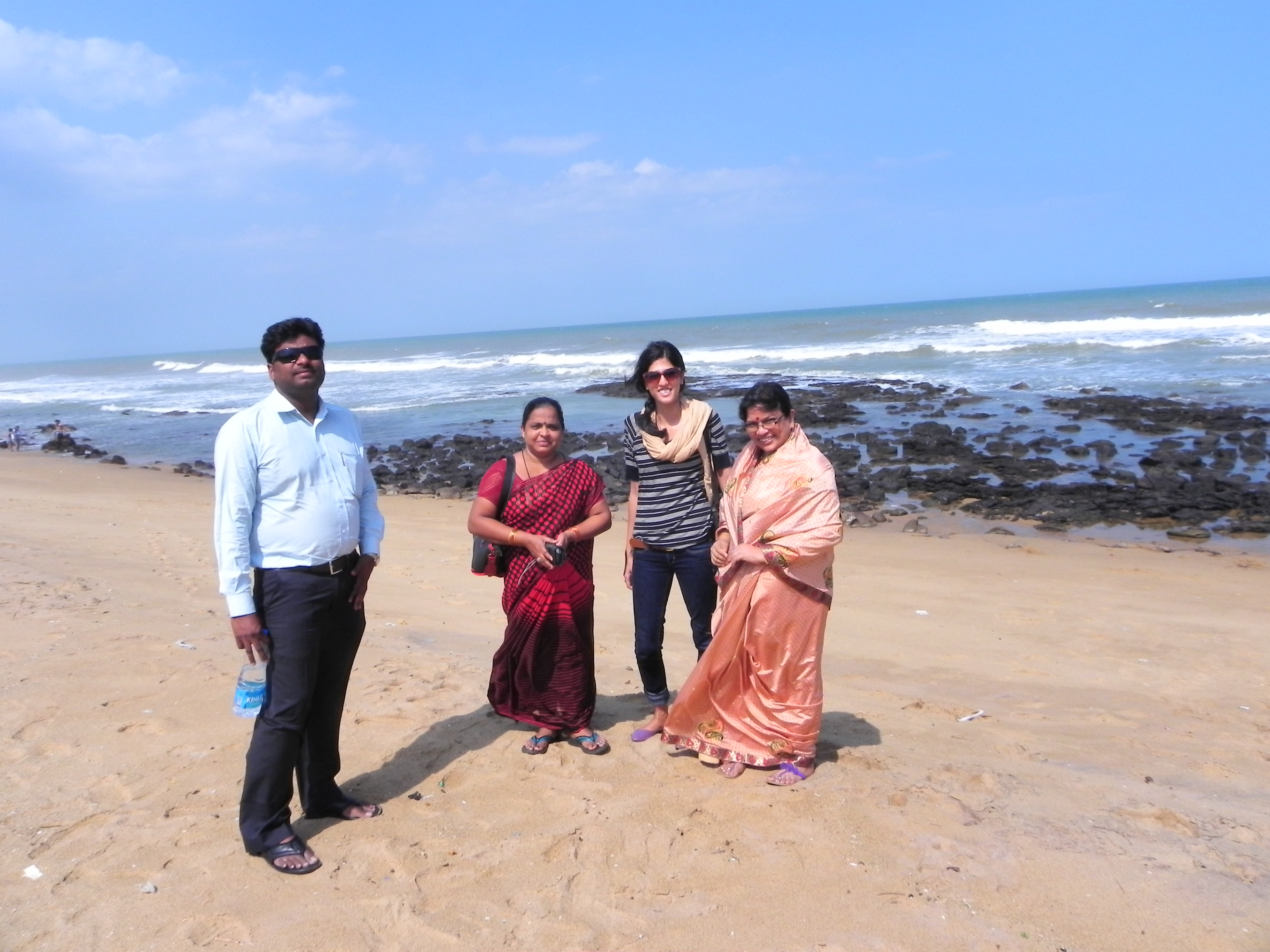
Vijay also introduced me to his wife and wonderful 6month baby and took me to local temples and dargahs and hidden beaches among thriving fishing villages. While Prasanna Ma’am provided the intellectual support I so needed, and Suresh and Vijay showed me their Vizag, all of them welcomed me straight into their homes. Among those faces, Telegu didn’t seem so foreign, the food didn’t seem that spicy, and the weather was never too uncomfortable.

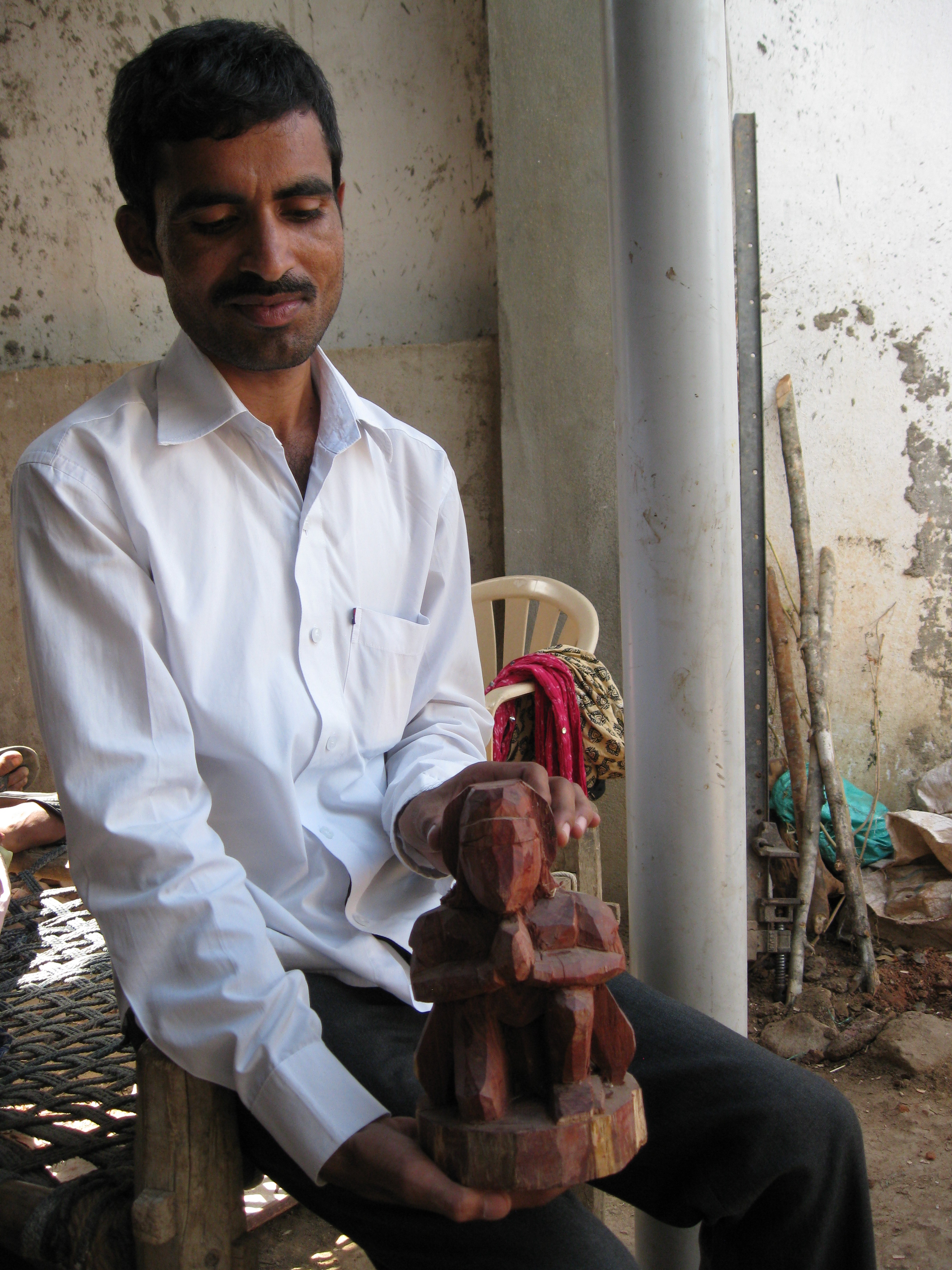
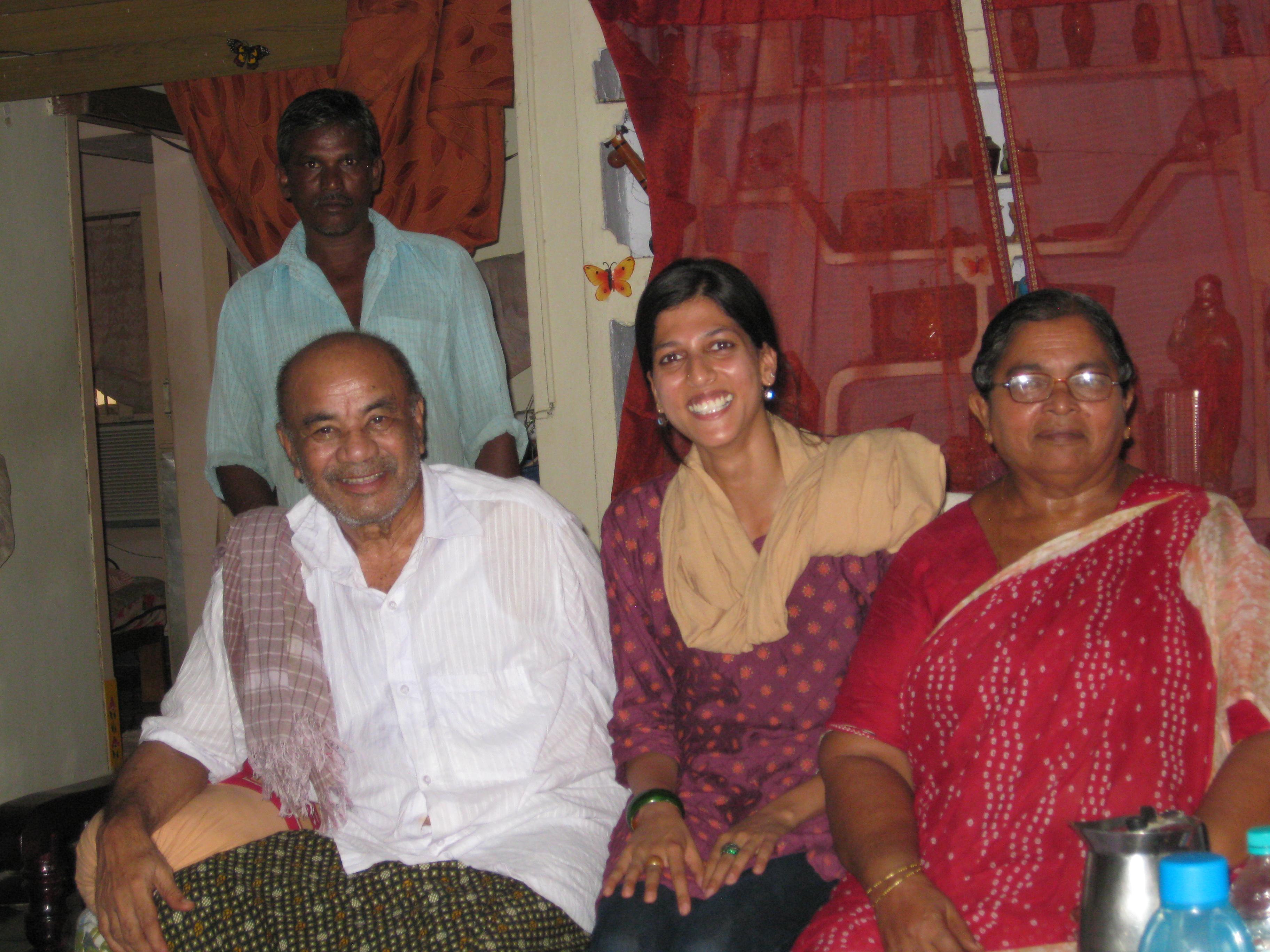
Vijayawada strengthened the bonds I made in Vizag because I was able to meet Prasanna Ma’am’s father and mother, an old couple living across the Krishna River in Sitalakshmipuram. Among this family I learned about old Vijayawada, when the city was less populated and routes were demarcated by the nishanis left behind by the various rulers. Aunty made me the best coconut milk rice I have had with spicy potatoes. Hearing the Ramayana from uncle was a special treat, one that I will always carry with me. A rather unsuspecting friend was found in the President of KBM college, a friend and mentor of Prasanna Ma’am. He didn’t have to but he found it in his big heart to become my guide in Kondapalle and take me to visit and talk to local toy-makers there. He too told me a variety of stories about rituals and local sites in the area, introducing me to his wife and children and his naughty grandson. Over chai and Cabbaga pakoda, we chatted about religion and dolls. It was in Vijayawada that I also befriended a local waiter called Suri who became my go-to person about buses, local destinations and food. The tomato rice with buttermilk was a special favorite along with puri aloo (fried tortillas that poof up with turmeric, onion and green chilli seasoned potatoes).

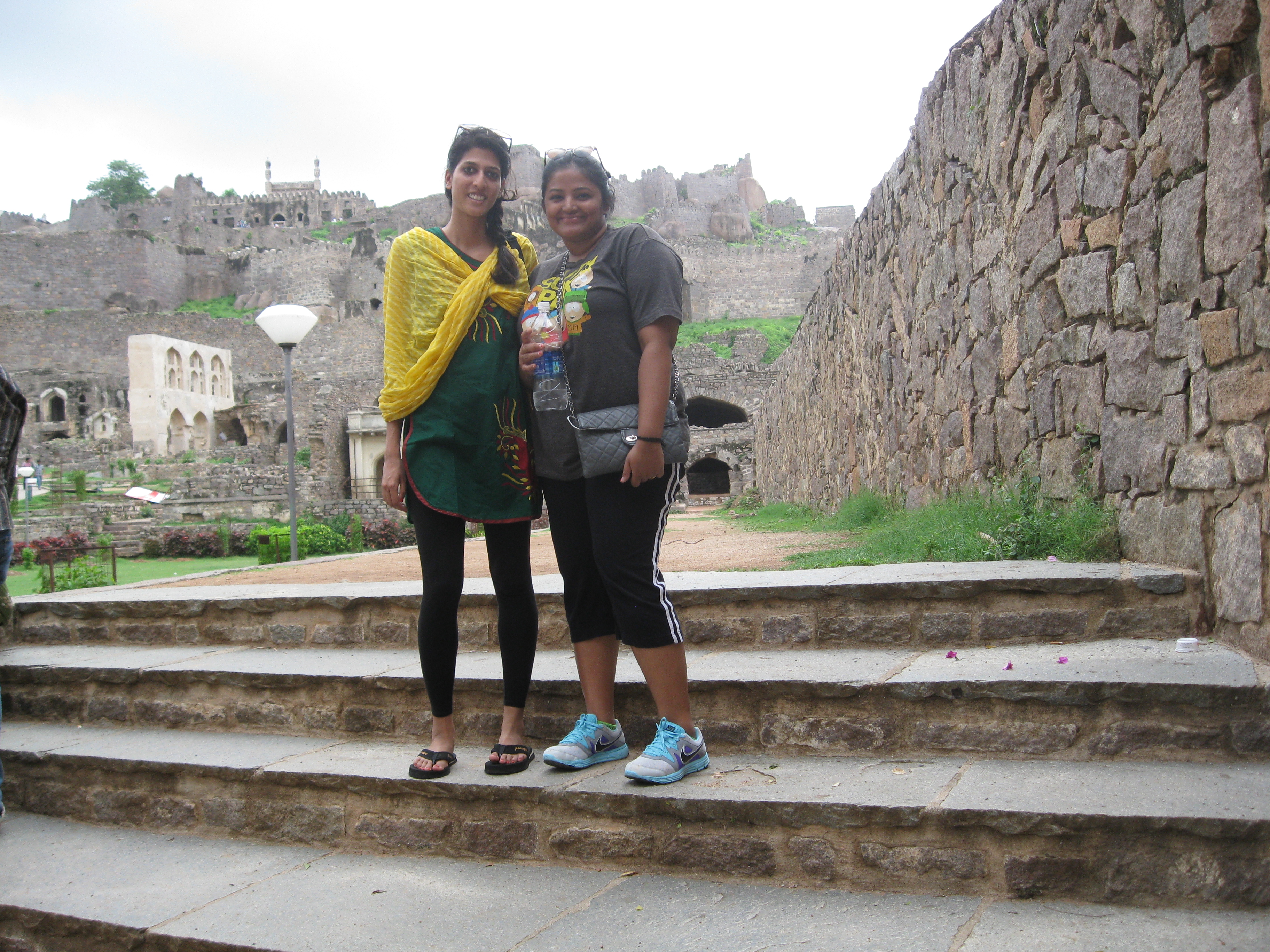
The very last destination of my trip was Hyderabad. Being a modern city with historical significance I wasn’t sure what to expect. Here too a childhood friend who happened to be living in the city took me around and showed me the time of my life. Enlivened by the youth of Hyderabad I didn’t feel so far away from America. I often had to remind myself I was in India. However its modernity didn’t overshadow the traditional role it had played. The remnants of culture and civilization from a time just a few centuries before still existed as well. Visiting Golconda Fort or the Qutub Shahi tombs, hearing about Visa Balaji – the visa granting Vishnu avatar, or talking to my friend’s husband about his corporate job at Amazon, or puking my breakfast outside Charminar near the Lad Bazaar, I will never forget the joy of friendship in this trip.

As you may tell from my post, food and people have formed pleasant memories in my mind, making AP a tough to rate place in my heart. AP may prove lesser important that I first imagined for my research but the friendships will last beyond this visit. Afterall isn’t this why we do fieldwork? To build friendships places a special burden, a burden of trust as Pierre Bourdieu says and with that comes the encumbrance of true understanding. If I ever would pen down my thoughts about this journey in the form of data, I would have to think very carefully before portraying my friends who gladly laughed and chided me through this journey.

Friends with Benefits: Filling in the Gaps of my visit to AP (Part One)

(Obviously we meet innumerable people in our travels, not all of whom get directly mentioned, but their thoughts, their help, shall always be remembered. I wanted to make a special mention of some.)

Ethnography comes with its perks as well and one of those major bonuses is friendship. Apart from our interlocutors (for me the doll-makers) there are many unforgettable faces I befriended along the way. It is not serious all the time. Big or small, rich or poor, every person I have met in my lonesome travels has become a friend. The big hearts that people seem to have all around the smallest of villages never fails to baffle me. My parents being their usual careful selves had warned me not to trust anyone as I was a single female travelling alone. My best friends cautioned me about the young men who may predate upon my single self. I too experienced at least two unfortunate encounters that spoke to the fears of my well-wishers. But far from the maddening crowd, there have been people I could trust and people who opened their hearts and towns up to me asking for nothing in return and for this I feel blessed and fortunate. Instead of sleazy men, I found helpful young and old men and women who showed me the way, took me to the right spots, and answered my weird questions about places and things. They happily relinquished their stereotype to share this journey with me.

To them I have to dedicate this post. As I left the state of Andhra Pradesh (AP) two weeks ago back to my home turf of Chennai, I left with a heavy heart and many memories of spicy food, hot sweaty bus rides, and gaily colored temples, churches and mosques. AP was vastly new territory for me. I have conducted fieldwork in India before and I have travelled to several major cities in India but AP, its towns, its language, its food, and its people were new to me. I even recall an earlier post where I mentioned that temple customs were different and locals didn’t hesitate to tell me do things differently in a shrine. Something I wasn’t used to people telling me a Hindu was how to act in a Temple, where I thought I was comfortable doing my own routine. This was my first lesson and I learned it at the Kalahasti Temple near Tirupati, an early visit on my journey up north. Among the many things I learned, I also learned about AP and its brand of friendship – a kind of tough love!

My first friends came from SVUniversity at Tirupati where Professors retired and current came to visit me and tell me the things they knew about dolls. The candid honesty about the doll-makers prepared me for the wealth of obstacles I would face before I could find even one doll-maker or someone willing to tell me about them. It was here too that I had my first plate of Chilly Paneer for this trip, an Indian-Chinese delicacy, must try if you like fried spicy cottage cheese.

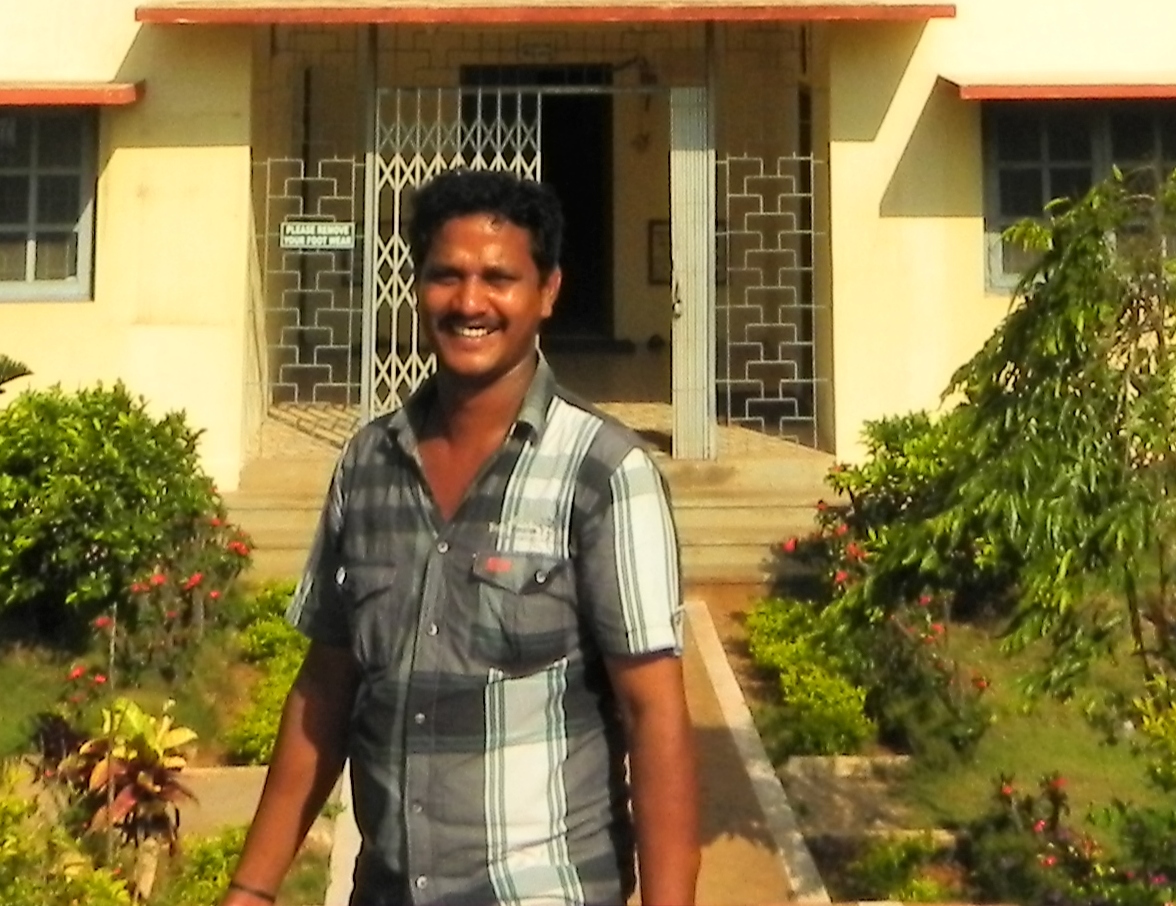
I met my first fieldwork assistant as well in Tirupati, Thinappa, a man with a golden heart. Thinappa, a Telegu speaking student at the university had graciously accepted to join me on my travels to the local villages and help me navigate the various people and their towns. Frankly only one doll maker didn’t speak a word of Tamil and that’s where I required Thinappa’s help the most. But along the way, in our broken tongues – between Telegu, Tamil, and English – we became good friends and I learned about how sociologists in India do their work in a very relevant place, where everything they study matters to the world they live in directly. Here in western academia, we bring non-Indian voices and priorities to the forefront of our analyses of India’s problems, but in Thinappa’s classroom, every data that was collected fed directly back into the system. He researches the re-association of juvenile delinquents in Tirupati’s jails back into society. His hometown, several districts away was struggling to curtail the repeat offences of juvenile delinquents.

In Vizag, I met a different kind of crew. My loyalties were divided between Prasanna Ma’am, a local English professor and Tribal studies expert and her family and friends, and my serviced hotel folks and their local driver cum guide. Both taught me invaluable things about AP’s landscape, its people, and their values. I wrote about Prasanna Ma’am in an earlier post but I didn’t mention my guide Vijay who took me to the most picturesque spots of Vizag and temples nestled away in hill tops with spectacular beaches. I didn’t miss Hawaii for even a moment.