
Among the many friends I made in Kumbhakonam, one home in the agraharam of the area stood out. Devoted primarily to Vishnu and still active devotional singers in local temples, Mamma and Mammi, a seventy year old couple, eagerly invited me into their homes and lives. I had been referred to them by a distant cousin in Chennai, when I asked if I could meet older women who perform Bommai Golu. Kumbhakonam will be a hotspot for my research of Golu as everyone I spoke to knew of the ritual and even the local temple hosts a large festival during Navarathiri which houses several hundred year old dolls, collected by the temple and its preceding officers.
Mammi is a great cook, a ritual specialist, and in the few days I spent with her, I was able to witness her varalakshmi nonbu – a vrattam or vow ritual performed by women in the home to the Goddess Lakshmi. A colleague of mine in Atlanta who studies vowing rituals of Muslim women will find my experience fodder for contrasting with her own work. 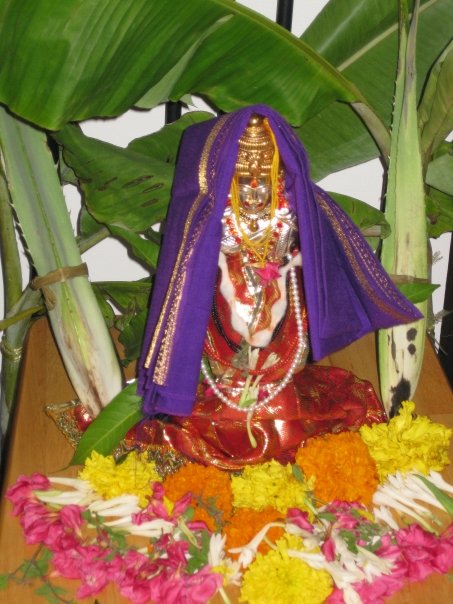 Varalakshmi nonbu is not only about the puja(worship) and the accompanying shlokas (chanting of Sanskrit verses), but it is also about the community of women who gather and sing to the goddess during the evening of the celebration. Visiting each other’s homes, much like they do on the nine days of Golu, to see each other’s decorated goddess image, mothers and their daughters take great pains to ensure that everything is conducted appropriately. The night before the goddess’ image is placed in the rice sack of the home. The morning of the puja, the woman performing the vow wakes up to wear her madi saree (ritually pure saree only work on ritual days) and begins her decoration of the altar space with specially knotted leaves and finishes by adorning Lakshmi with a new paavadai (stitched saree) and jewels. Satisfied with her adornment the woman then proceeds to read the vow shlokas from a ritual manual. In earlier times Brahmin priests visited homes to perform this function but today each woman performs this in her domestic space, by herself, and for immediate family. In the evening the celebrations really begin. Women sing to Lakshmi, exchange gossip, and gape at one another’s adornment of Lakshmi. Each woman tells the other when the celebrations will be in her home so that their timings don’t overlap. The householder offers each guest betel leaves, turmeric and betel nuts along with sandal paste and vermillion, and a piece of blouse cloth or a comb with a mirror, and a small donation. Sundal/ sprouted dal tossed in shredded coconut will also be served in every home.
That evening after they sang their songs, the women’s conversation slowly drifted to Mammi’s adornment of Lakshmi. One aunty praised her usage of tiny threads and a supporting stick to hold up the paavadai that made it look like Lakshmi’s skirt billowed out around her. Another commented on someone’s innovative use of placing the wick precisely into the puja lamp so that it stayed lit longer. Several young girls had also accompanied their mother for the celebrations that evening. They took in this information too, however unconsciously, adding to their understanding of an efficacious puja. 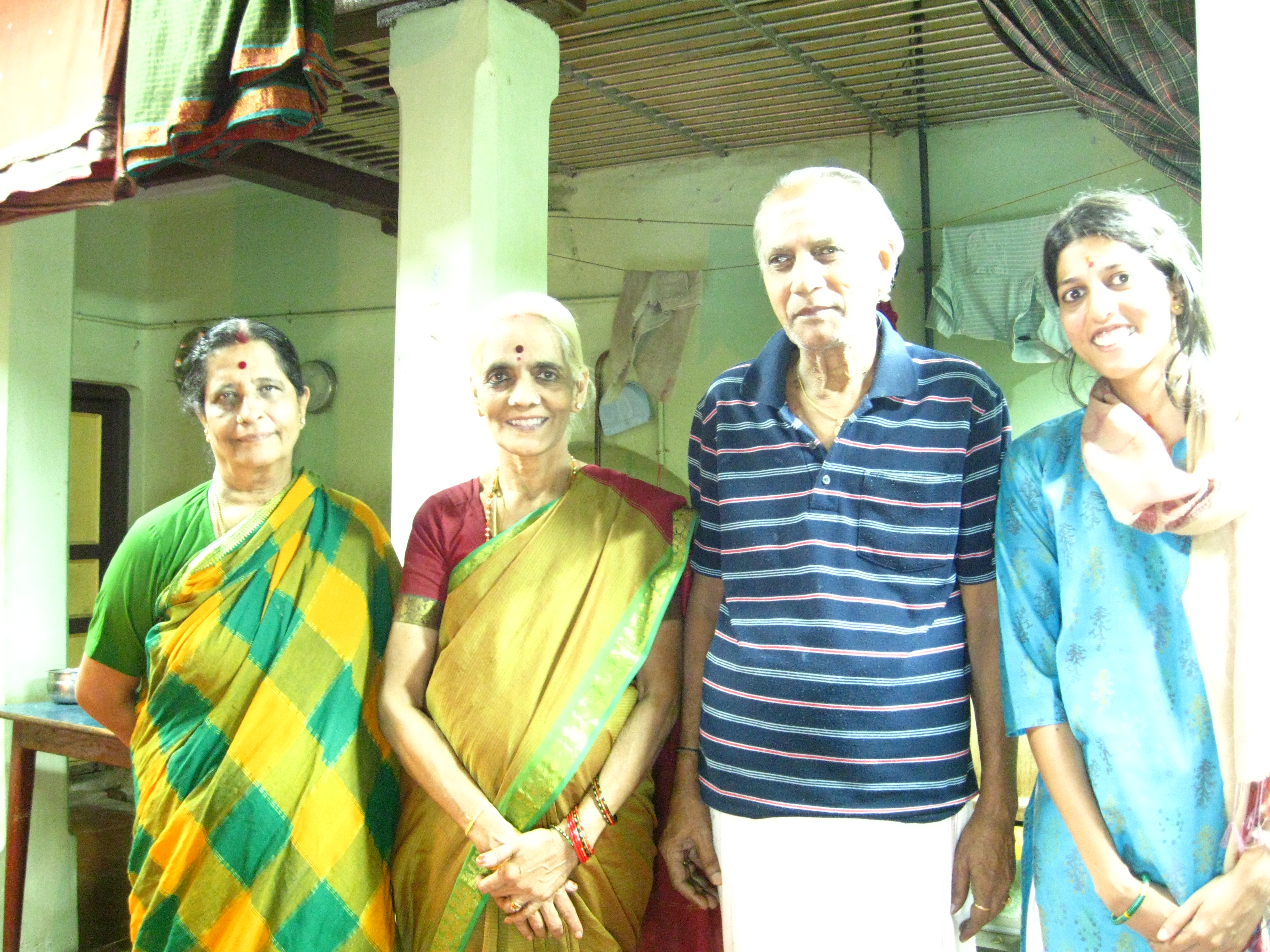 Mammi had learned in the same way too, attending varalakshmi nonbu’s in neighboring homes as a young girl. Spending varalakshmi nonbu with Mammi and her friends I realized that these occasions of vowing were not solitary acts. Usually vowing rituals are understood as an individual act – where the petitioner makes a pledge or takes a vow on behalf of her children, husband or brother and then proceeds to perform worship, recite prayers, fast, etc. and usually completes the vow with a marker/ signifier of having accomplished the vow. While the solitary functions of the vowing ritual of varalakshmi nonbu still hold true, the congeniality shared among the group of women in the exchanges that occur after the puja say something more. Vowing also serves a social function wherein women discuss and display their performance of puja, sharing cultural information on the efficacy of the ritual.
 bommalāttum