
The Kondapalle artisans were starkly different from the Thathacharis of the villages surrounding Tirupati. Though the Indian government has recognized some of the Kondapalle toy maker’s efforts and started two schools for skill training, a lot of these artists told me a different story. They loved their professions and had chosen them voluntarily. This gave them a sense of pride and dignity for their occupation. Most were not following a tradition passed down from their fathers. 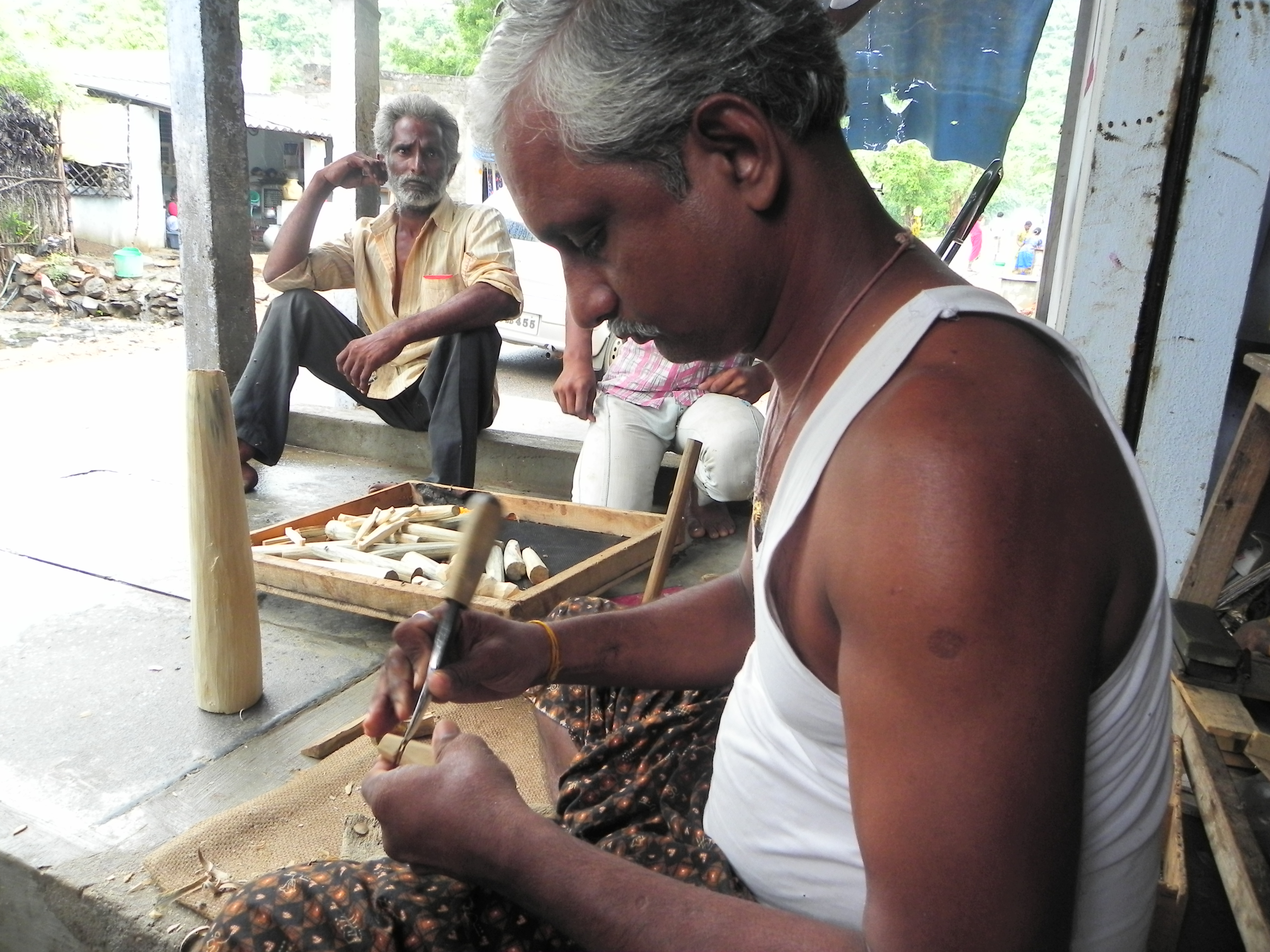 Gopal Rao, a forty five year old doll maker told me, “My family has traditionally been farmers, we till the land. I love making these dolls, and I chose this out of my interest. I couldn’t work another day without doing something that made me happy.” However, he still wanted to pass on this craft to his children and all those who wish to learn. He told me a story of his Achari doll-making teacher from Kondapalle. About thirty years ago, he fought with his father to visit this doll-maker and eventually ended up becoming his pupil along with five neighborhood boys. Today he still maintains great reverence for that teacher and values his decision to go against his father’s wishes. He does add, “My parents were right, there is no money in making dolls. But, I love what I do and it isn’t about the money. We are able to get by comfortably.”
Another difference between the Kondapalle and Tirupati doll makers was that they allowed women to participate in the task of evaluating and painting dolls. Women in Tirupati Thathachari’s homes were not allowed to do the rough task of chipping and shaping wood. Here too in Kondapalle, men take the bulk of the sculpting work. They shape the wood, which is easily malleable by hand, and craft beautiful features, designs, and dioramas. Their wives step in to finish the job they have begun. Women paint these dolls. Gopal’s wife especially loves to paint dolls and her eyes light up when she describes the care she takes to finish each image her husband has begun. 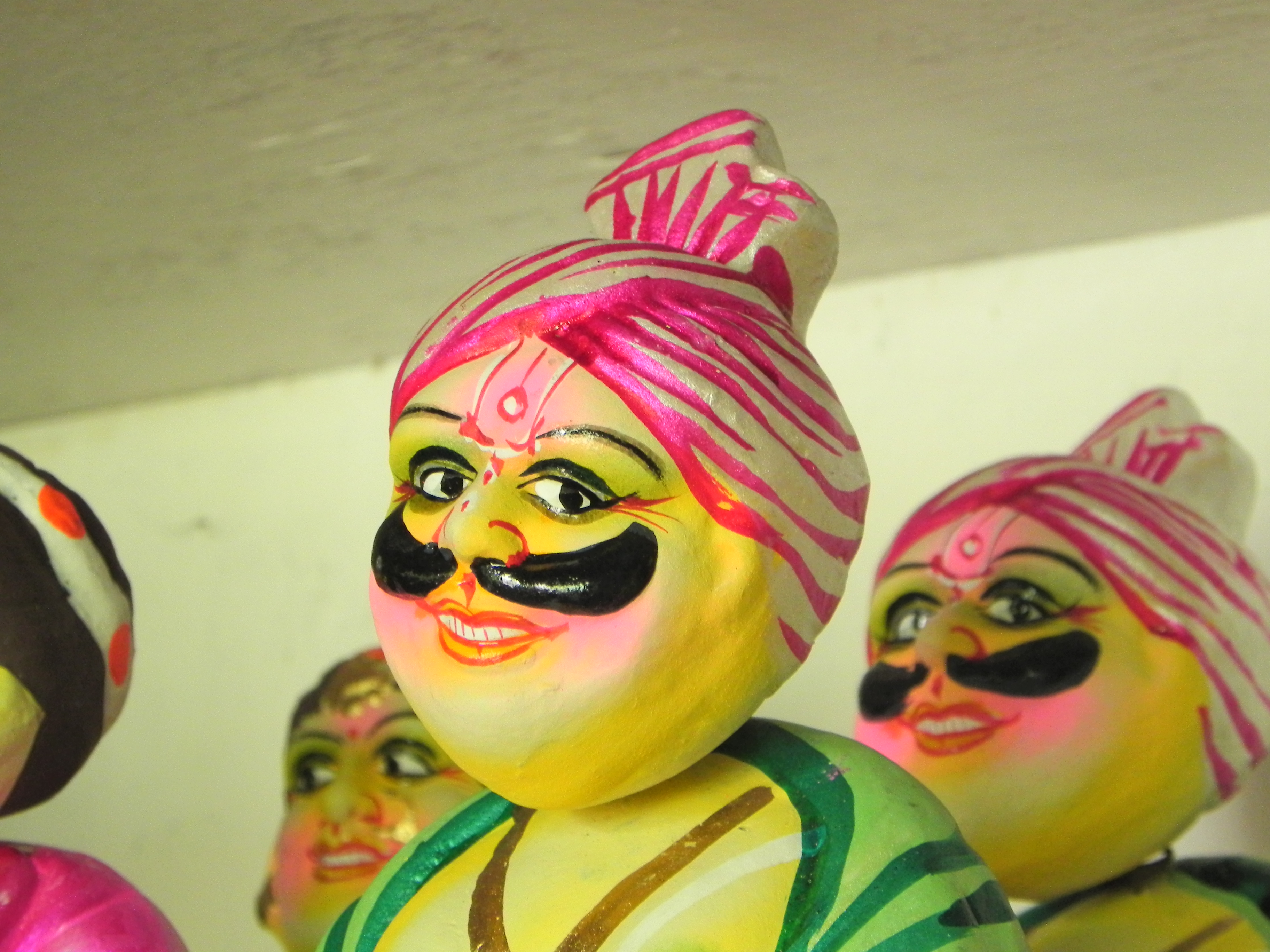 The paints used are mostly natural dyes from local flowers and berries that I saw, but some chemical paints are used for larger designs to protect the pieces and make them last longer.
Bhanumati is shy though, and didn’t wish to be photographed and rewarded for her efforts. She claimed that Gopal did all the major work. But I wondered how she could take a task such as painting the face of the doll so simply, when after all that is what gives beauty and finality to an image? Gopal stepped in here to voice his own pride for his wife’s work. “Bahnumati does the real work – she carefully proportions and paints the eyes and the torso, the most prominent parts of the dolls. Her hand is so good that it doesn’t make errors.”
Like the Tirupati doll makers, nothing can go to waste here in Kondapalle. No material, no paint, no chip of poniki wood, however cheap can be treated lightly. The doll making street is hidden in a picturesque valley overlooking the large hill ranges that made Kondapalle a famous martial center for the reigning Kings of the East. 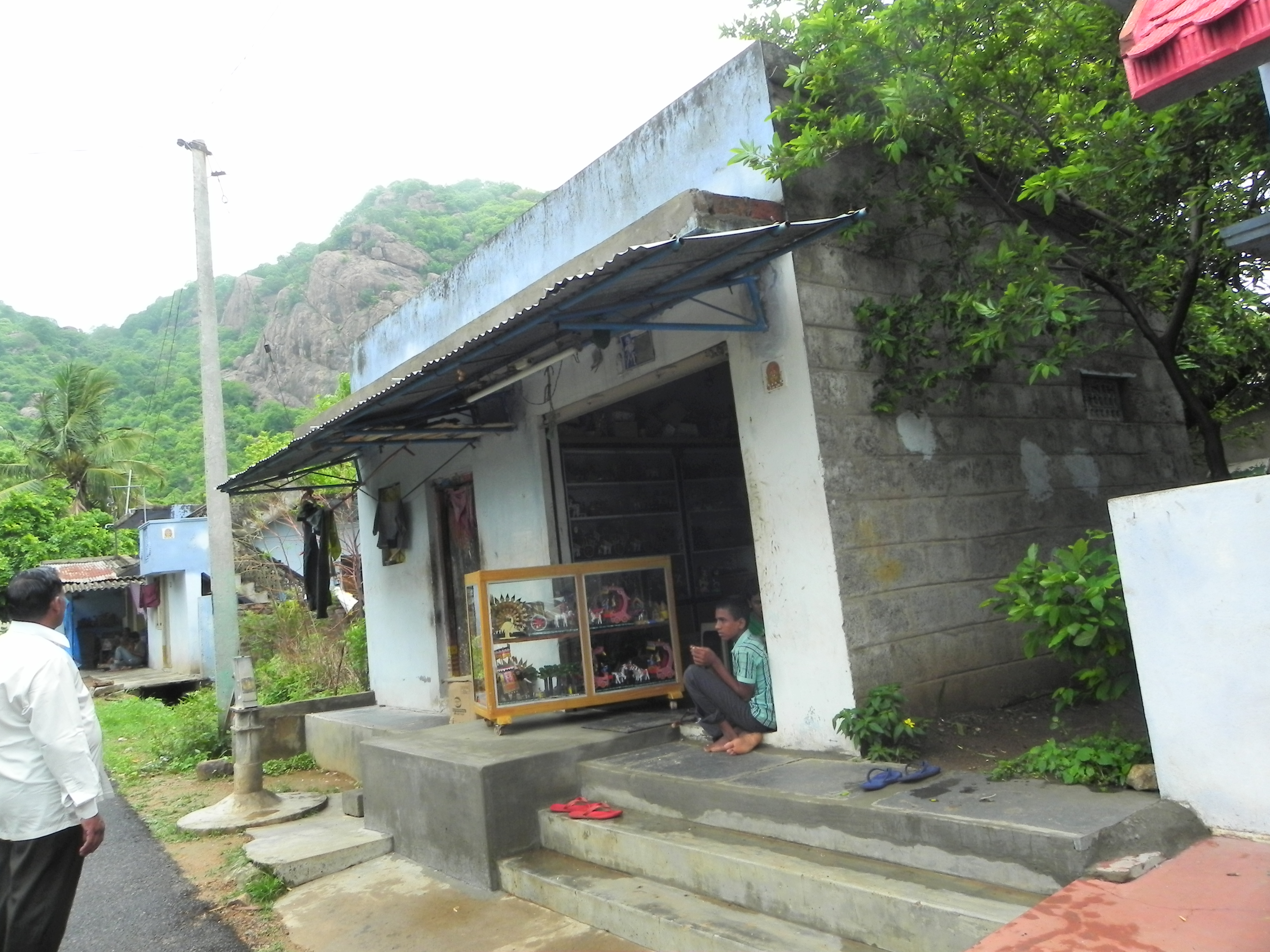 In earlier times, dolls were made to replicate the natural world. Bullock carts, village rituals, and King’s processions are quite famous images from Kondapalle. However today the market demands anything and everything be recreated for display. The doll makers are aware of this and gingerly respond that they will custom make any images desired by the huge Emporium owners of Tirupathi/ Andhra Pradesh.
I also asked them about Bommai Golu and what they knew about how their dolls are used in people’s homes. Most of them were aware of the large displays of Golu held by temples/ exhibition halls but none thought of it as a domestic ritual. While the women of Kondapalle may appear different than their Brahmin counterparts in Andhra Pradesh or even Tamilnadu, their fascination for dolls remains constant. The alankaram (adornment) is what defines how far the owner or creator cherishes her creation. While the Kondapalle women perform their own Golu, where they conscientiously paint and display their dolls for people to purchase; Brahmin women too carefully choose these dolls and decorate their homes for a public display. Each one wants their creativity to be showcased, their creation and its’ alankaram to be noticed.
 bommalāttum