After my supposed detour in Vizag, I did arrive at the real destination I was headed for – Vijayawada (one of the many cities in India named after “vijaya” or “victory” to commemorate the establishment of a kingship or its’ capital). I had selected Vijayawada for its proximity to Kondapalle, the city known for making martial toys and village landscapes. But Vijayawada had a lot more to offer than just dolls. The city is divided between the two sides of the bank of river Krishna. 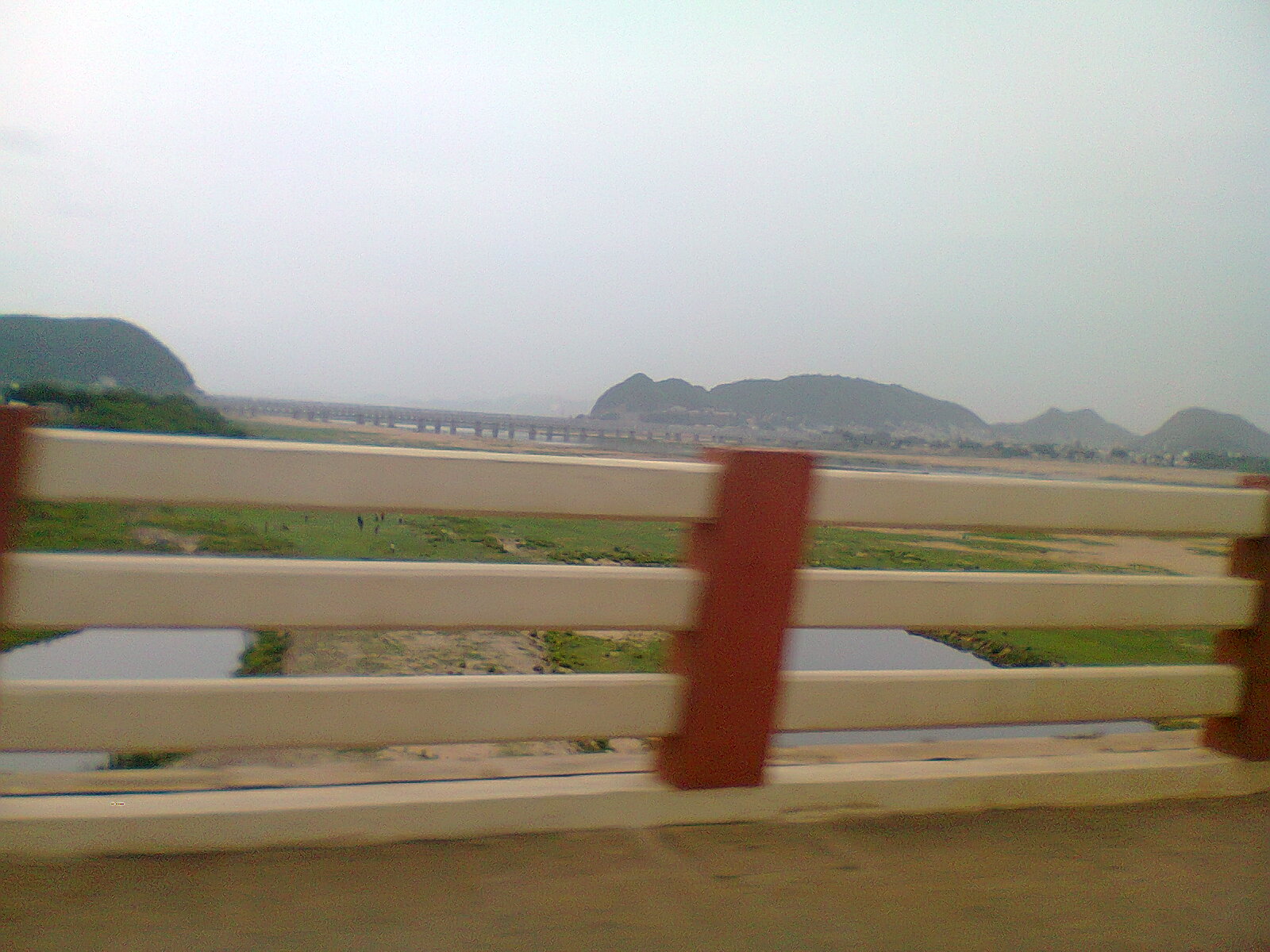 Connecting the two banks are two roadways and flanking the northern roadway is a large hill range upon which Kanakadurgamma’s temple is situated. Known for her immense strength in vanquishing demons, Mahisasuramardini (the slayer of the buffalo demon Mahisha), I can see why the goddess chose to live in this city. It is beautiful city, situated in a valley with plenty of rainfall, the goddess and her forms are everywhere. The city is covered with paddy fields, displaying the abundance of the fertile soil of the Krishna River. Not only the goddess or Hindu Kings, but every empire that has controlled India has left a mark in Vijayawada – the most prominent being – Buddhist, Hindu, and British owing to the famous Buddhist caves, the Durga temple, and a large St.Mary’s church upon the hilltop. As my driver told me in Hindi “everyone comes to our earth and leaves their mark upon it”.
Visiting Kanakadurgamma was no simple task; two bus rides and one short hike later, you find yourself at the entrance to a grand temple situated in the hills. From below all you can see at the top, is no temple tower, but a large “aum” symbol in glowing light with a large upside down trident symbolic of the goddess. Luckily I had arrived rather early. During my bus ride I had befriended a north-Indian family who was coming to visit the goddess thanking her for the birth of their baby girl, they had waited five years to conceive. According to the mother, if they got a baby, they were supposed to make a trip around the famous Durga temples across India. They had never been to south India and they didn’t speak Telegu so they were quite unfamiliar with the protocol. Every region in India has different prescribed rules for how to enter, where to leave your shoes, what types of ritual offerings to buy etc. I too had to learn my way around Andhra temples this summer but four weeks into this journey, I was certainly more adept than the family visiting with their baby girl. 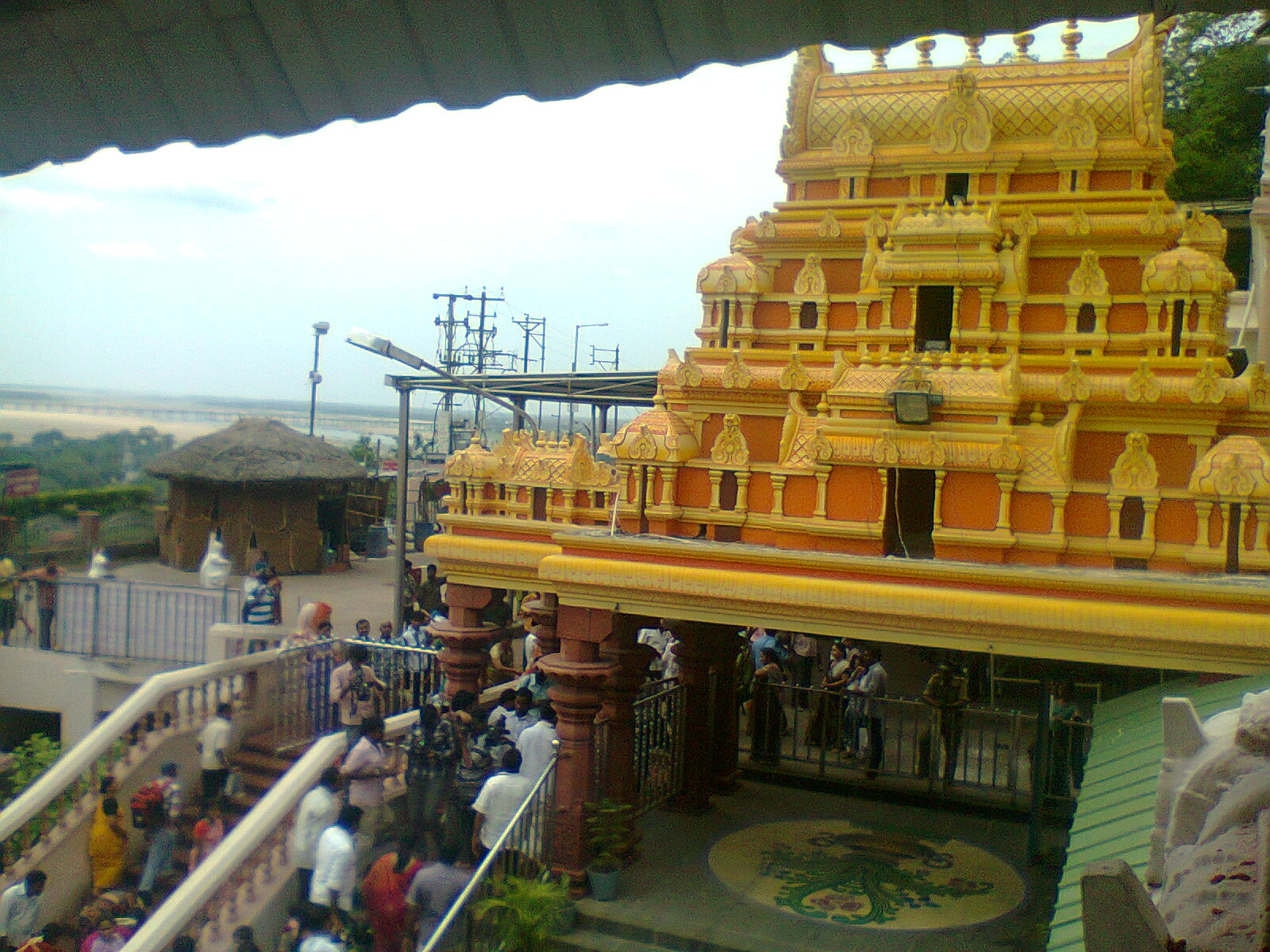
After leaving our footwear, we entered the temple premises and started a long winding set of climbs up and down into the sanctum of the shrine. The shrine itself was quite unique as the goddess was faced by a large tree covered in vermillion and turmeric upon which parents had hung little cradles in the anticipation of a baby. One had to make their way around the tree to visit the goddess. Young girls and married women also placed/ draped sarees over the tree and offered red bangles to it. A priest performs a puja on your behalf and offered me some vermillion to take home with me. The goddess herself is completely covered in turmeric and her face is drawn upon the turmeric alankaram (adornment). The most visible parts of her face are her eyes and her large red dot upon her forehead.
Departing her shrine I felt a sense of comfort and a sense of belonging among the women around me as we all looked with anticipation and placed vermillion on our own foreheads. 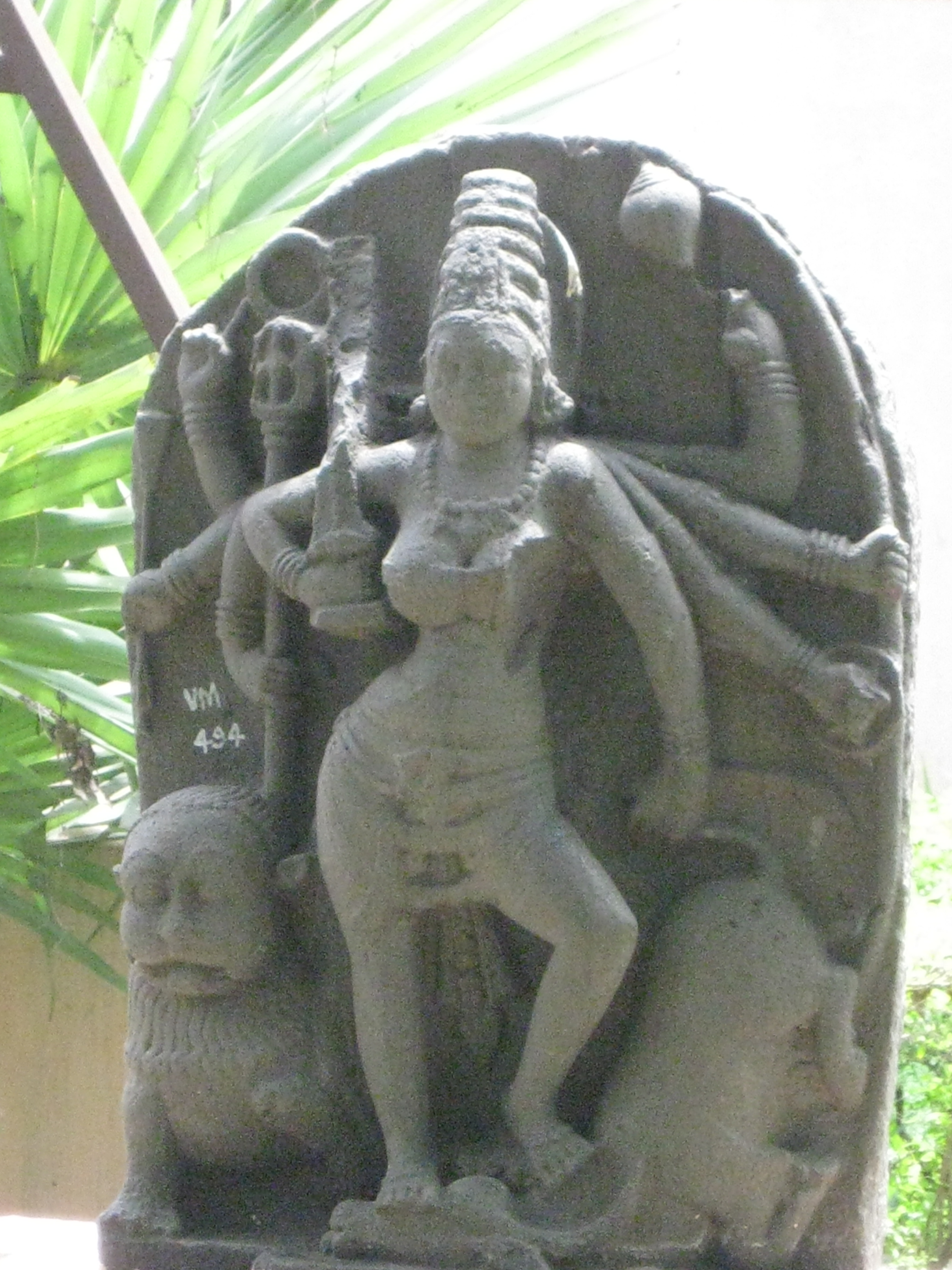
Durga’s jewellery, her yellow stained faced, her pretty saree, all indicated that she was one of us. Whether we had fashioned the goddess in our image or ourselves in the image of the goddess the resemblance was striking and as I said comforting. We are often not alone in this chaotic mess called life. The goddess is a woman just like us and faces the struggles and the respect that comes with being bestowed with that identity. One of the questions I was asked repeated during this trip in Vijayawada was “woman, did you come here alone?” I think I can safely say that though I came here alone, I didn’t leave alone.
 bommalāttum