
Among the many Hindu sites I visited in Vizag, I came upon Aastana Hazrat Baba Syed Tajuddin Shah Qadari’s Dargah (A Sufi Saint’s Shrine), nestled away on Dolphin Konda (hill). 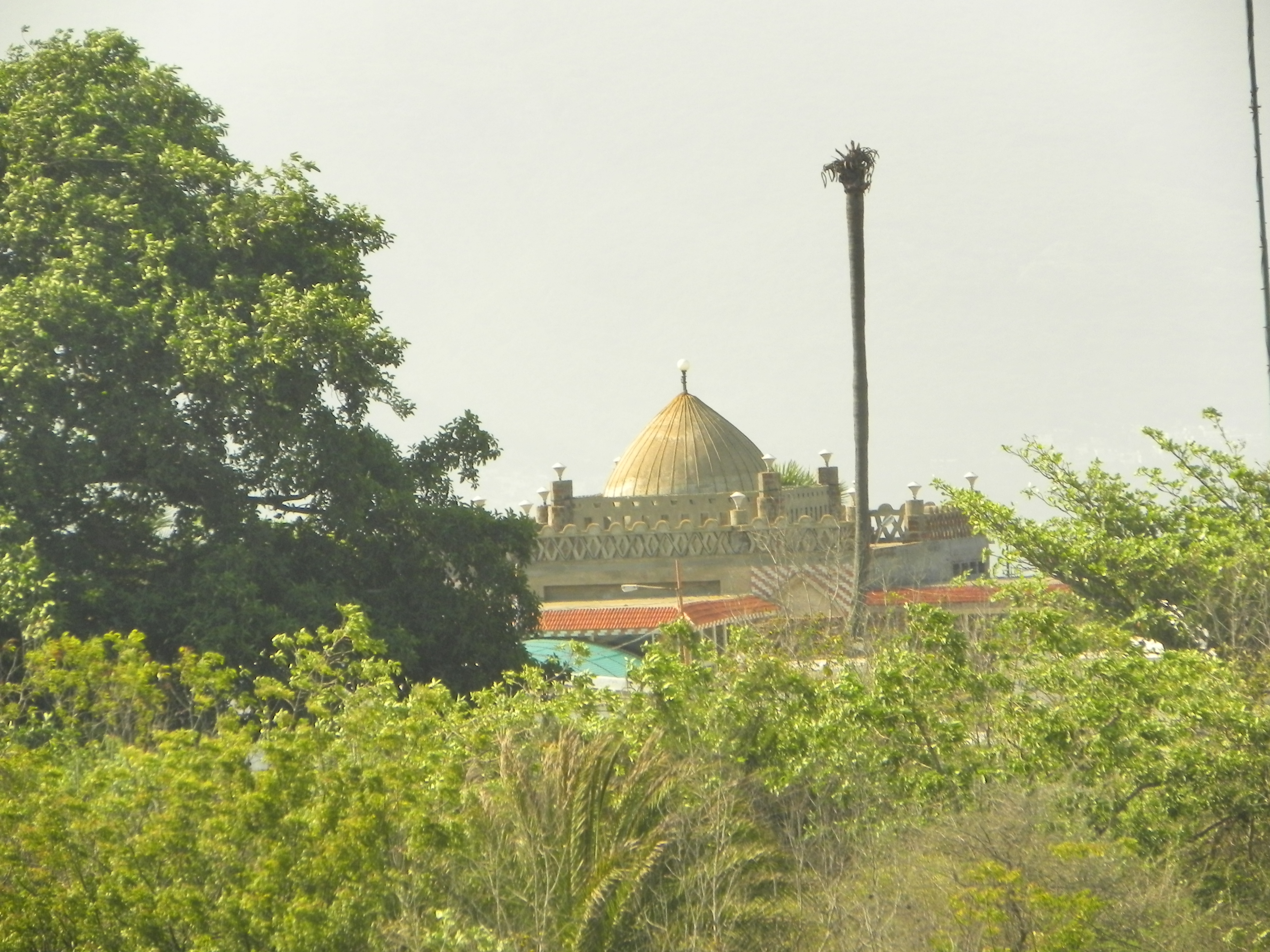 The Hindu newspaper even did a cover on this dargah two years ago and I can safely say that it looks intact and the existing Baba Mohammad Siddique is still alive and I met him. I wasn’t planning to visit the shrine but I had heard that there was a famous dargah there visited by Hindus and Muslims alike. Detouring down the road from the Dolphin Lighthouse I found the dargah a silent and secluded sanctum. The room pictured in the article by The Hindu is a newer construction, one where Baba Sheikh Fareed Shakarganj’s chilla (grave) rests and to which people offer their dua (prayers). The entire dargah plot consists of two rooms and seven nishanis (flag posts). Each flag post is dedicated to a Sufi Saint in the lineage of Baba Syed Tajuddin Shah Quadri. Having just taken a class on Sufism in the Spring and finally able to converse with someone fluent in Hindi, I decided to stop for a while and talk to the local keeper there, a young murid (student) of the living Baba Mohammad Siddique.
I was told that the first marker upon Dolphin hill was the little room I visited first (not pictured in the articles) where a little lamp burns. This room was the meditation chamber for Aastana Hazrat Baba Syed Tajuddin Shah Qadari, from the lineage of Abdul Qadar al-Jilani (a popular Sufi Master among south Indians). His meditation chamber was accordingly small, about 3 ft cuboid. Most Sufi masters believed that smaller rooms were perfect for initiating meditation chambers and little rooms upon secluded caves were an ideal choice. Today visitors (Hindus mostly) break coconuts in that room and offer incense to the lamp there. Mughal Prince Salim was among the first to discover this spot and erected a nishani for Ali (The son of Prophet Muhammad) marking the spot for the future dargah. Every week dhikr is hosted in this dargah too and participants come from all over the country to seek counsel from Baba Mohammad Siddique who offers prayers, incense, and flowers on their behalf to the chilla. To enter the dargah one firsts performs ablutions (washing hands and feet) and one buys incense and/or coconut and visits each shrine to remember the saints. After completion one sits down to pray/ meditates beside the chilla. Finally a murid offers you tea and a meal (if available) before you go onward on your day.
Emblematizing the syncretism of two very distinct faiths (Hindu and Muslim) I found this dargah more peaceful than my visit to temples this trip. Not to privilege silence over noise or prioritize the peacefulness of the dargah over the chaotic worship in the Kalika Durgamma or Simhachalam Narasimha Temples visited earlier that day, however, there was something very distinct about the temples and the dargah that indicated the nature of the visits people make to ‘places of worship’. I have often wondered why Hindus go to the temple. Every home does have an elaborate altar housing deities and their favorite offerings. It certainly isn’t “tranquility” that is sought in a temple especially when pressed up against foreign bodies struggling to catch a glimpse/ touch of a faraway god. 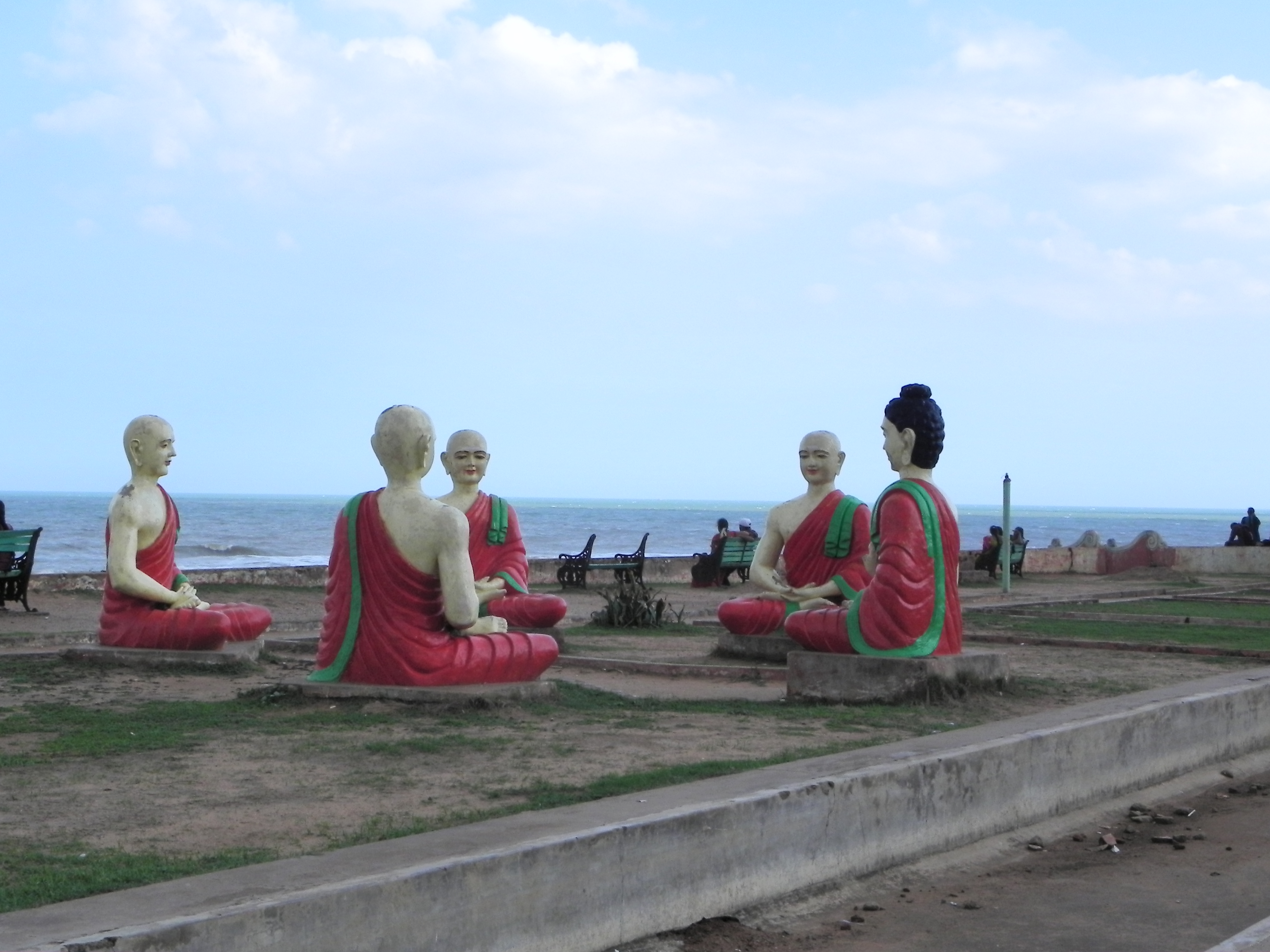 On second thought, perhaps Hindu temple visitors wish to seek something outside of their homes, an altar among altars, erected, demarcated as sacred, beyond the mundane home-world. Temples are also like amusement parks where families, neighbors, and like-minded community members meet and greet each other, like church on Sundays. Unlike the dargah I recently visited, the temple is not always a meditation space. What then is the relationship between tranquility and worship?
The visit itself is the journey, one that takes you through the gullies and gutters that eventually make its way to the womb (garbagriha/ inner sanctum) of the Hindu temple. You hardly feel clean while entering either. Having deposited your footwear somewhere and washed your hands, you slowly make your way into the ‘belly of the whale’. Your nose tickled with intoxicating smells, the soles of your feet wet with slimy and cool washed-off offerings, your eyes tear up in the smoke that rises from people’s homa yajnas, you hear chanting and bells resounding and you slowly become aware of how much there is happening around you while you join in with your tongue softly whispering shlokas. 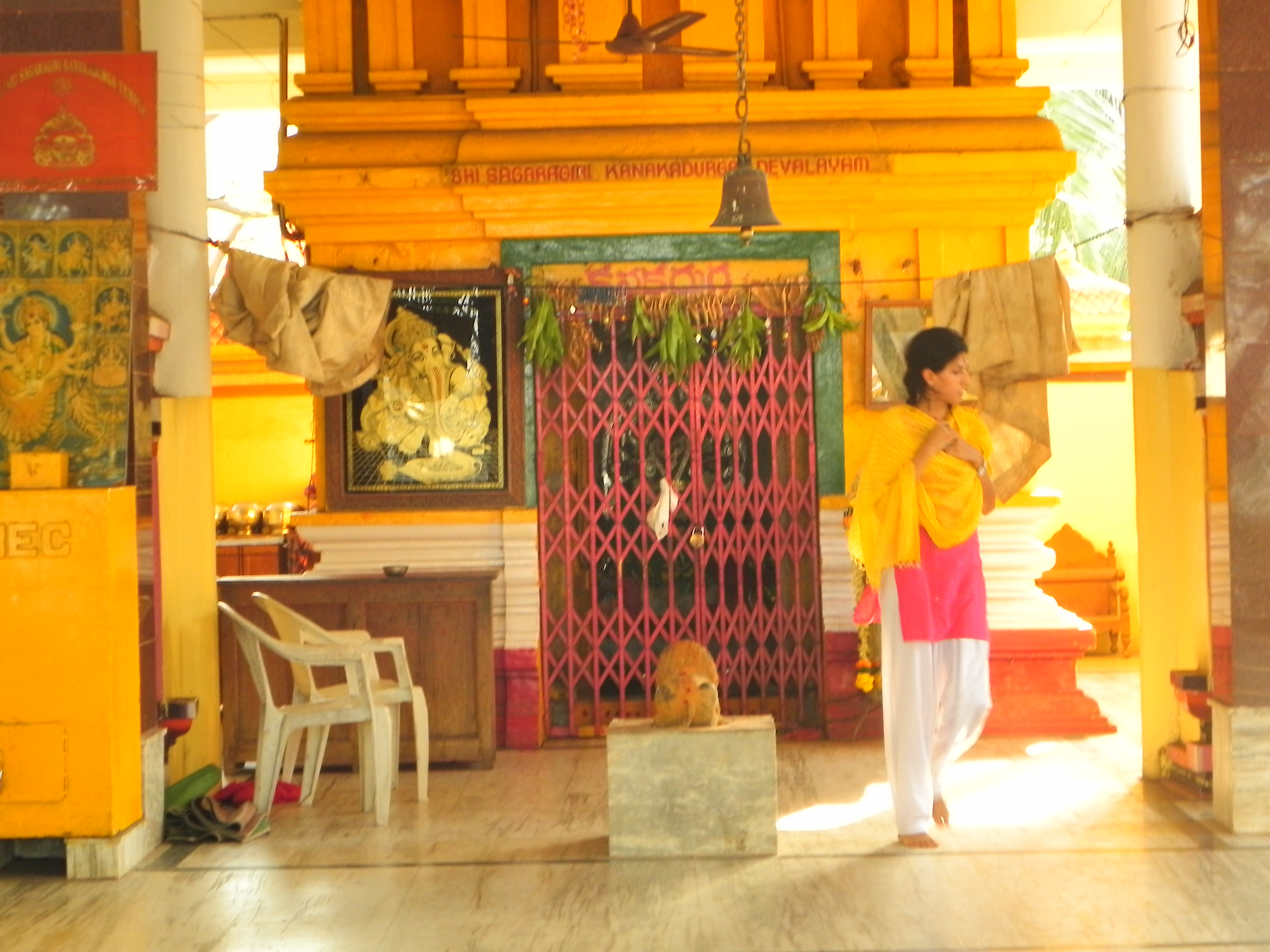 It illuminates one of the sensory triggers that occur during worship. Maybe worship for Hindus isn’t about cleansing oneself of the world and entering a quiet place for praying but rather diving into the deep end using the senses while trying to remember who it is we are visiting. I was especially reminded of this when I was lost in all the chaos around me, offering money to the priests, taking the various prasad and holy water they offered at the Durga temple that I had forgotten to see that I was facing Durgamma herself. To use another analogy, remember Arjuna from the Mahabharata, the excellent archer who always has his eye on the prize? During the archery competition set by Guru Drona for Kshatriya warriors, Arjuna is the only one who is able to shoot the rotating fish in the eye while looking down at its’ reflection in the water pool below. Visiting Hindu temples makes more sense when you apply that principle of archery – always remembering why you are there while getting lost in the little things around you is so much of life and its’ journey.
 bommalāttum
Landscaping Cholanagaram « bommalāttum