The spider who worshiped the Linga and other stories

    I arrived rather late last night to my hotel. Overlooking the seven hills upon which the major Venkateshwarar (Vishnu) temple was built, I am staying about 12km from lower Tirupati in a town called Renigunta. Today’s trip into the city was mostly to get my bearings, scope out the transportation situation, and plan my visits to the local religious and heritage sites. Lower Tirupati also houses a number of temples, a museum, and doll shops, but I decided to take the bus to the neighboring Shiva Temple called SriKalahasti, approximately 50km from Tirupati. I wanted to get a feel for the landscape and areas surrounding Tirupati before I began my interviews within the city. This temple was particularly unique and was an important pilgrimage destination for all Hindus. Two years ago, this temple suffered an unfortunate disaster – the main temple goburam collapsed due to unregulated construction in the surrounding areas. Even so, I was able to see the resurrected 3 goburams through a special viewing spot from within the temple complex. Situated at the foot of hills, this temple was said to have been constructed during the Pallava Dynasty and then restored during the Chola’s reign in the area too. I was told by one person on my one-hour bus journey that animals had performed worship to the Shiva linga there from which the temple derived its fame. Having been praised by Shiva for their devotion, the animals received liberation from their births. This is a popular trope, one I have heard before. In many a tale, Lord Shiva is notorious for being pleased by his devotees, and as it seems, animals too. In return, a boon or liberation is always promised by Shiva. Needless to say this temple’s linga was particularly unique. It is also considered a temple which has the vayu (wind manifestation) of Shiva. This particular point was also noted on posters within the temple complex in Tamil, praising the sacred capacity of the temple.

     The mula devata (root/major deity) of this temple is untouched by even Brahmin priests, another unique facet of this shrine. I watched as the priests performed puja in a room in front of the shrine, placing sandal paste and offerings upon a large steel table. Since the element represented by this form is wind, one can witness, in front of the linga, a series of flames that waver in the main sanctorum room, with no access to wind or open sky. Inside a room where most flames would remain still, I saw a semi-circle of little flames encircling a lamp in the center, all lightly wavering in a breeze. There were several shrines within the temple that were common to most Shiva temples. The circumambulation begins with the linga and then one is led through the several Nayannar Saiva saints. Surrounding the major shrine there is a row of lingas lining the inner grounds of the complex. The goddess consort of Shiva, Parvati/ Durga also has a shrine to herself. The final deity, a favorite of Shiva too, appears on the right whenever one has completed circumambulating a Shivalinga’s sanctum. This deity is Dakshinamoorthy, a favorite to students as well, as he is said to bequeath good memory to those who study intently. Kalahasti had a large and fancy alankaram (adornment) for him today. 

      As I was leaving the temple complex, a little light caught my eye on my left. This light shone through a linga completely made of alum stone (spatikum). At the very end of the line of lingas in the inner circle, this one shone like a gem. It was a little cloudy, murky like the materiality of the Shiva linga itself. Did the alum crystal represent a deity or was the deity represented as the spatikum? I wasn’t sure. But trying to understand the materiality of an object like a linga, one has to ask such a basic question.  Before I go any further I must preface myself – these are concerns of a scholar who is faced with not only the burden of translation and articulation, but also with the special burden of speaking about one community to the ears of audience unfamiliar to these practices, sometimes seeking a legitimization for another’s beliefs. A devotee may not wonder about the relationship between Shiva and his icon.

     Does the irrelevance of the question to a devotee imply that Shiva and the icon are one and the same? Could one equate Shiva with the stone itself, as it silently watches the world around ebb and flow? Stone, like Shiva who resides in the temple as wind, also witnesses the churning of the world, the rebuilding and collapses of the temple and township through history.  In other words, when one is worshipping a linga, are they worshipping Shiva, the geological nature of a stone, or both? I am not trying to disprove or prove that one answer is correct. Instead I wish to nuance the relationship between the material and what it represents. We could allow for an object to be two things at once, a stone in all that it represents and a deity in all that he/she represents. Moreover, what does the way people treat an object tell us about these objects themselves?

       Over the years, it has become harder to say many things about Hinduism, so much so, Hindus themselves have borrowed western and scholarly interpretations to offer justifications for what their practices and what their gods signify. One man Gopal told me today that, Hindus only worship the principals and ideals represented through names like Shiva and the linga. This is an old argument, one articulated even by the Vedantists who privileged knowledge over practice.  Is his answer just a regurgitation of an iconoclastic view, where knowledge of the divine is placed as superior to material manifestations of the divine? But Gopal’s articulation does not iron out the practices surrounding this material object – one that is very real and recognizes the material nature of the object itself. This is particularly pronounced in the alankaram/ adornment of Dakshinamoorthy or the goddess Durga. If the representation of the divine is all that mattered, then why is it important to dress, bathe, and feed the image? Afterall the image itself is there for a reason and its form must have a purpose, which cannot be explained away. Its sustained appearance throughout history is not an indication of a primitive way of thinking, but perhaps of practices reflecting a deeper understanding of the nature of the universe.  

        My search has led me one step closer, even though it hasn’t yet revealed much. It is only the first day, and some people have given me cookie-cutter answers, ones borrowed from a misunderstanding of materiality, where materiality is equated to idolatry. Are Hindus just trying to justify their faith to non-Hindus? The questions we ask of our own faith, only seem to tell me more about the society they live in. Acting like he was faced with the humiliation that idolatry was somehow unfashionable, Gopal chose to place knowledge about god as superior to the material manifestation of god. My advisor and fellow ethnographers have cautioned me that it would take many more meetings before people reveal more than just token responses. Tomorrow is another day. 
Holding out for a Hero…

The anxiety of planning my travels has officially set in. Three cities and only two months made me feel like I was planning more for the Amazing Race than pre-dissertation fieldwork.  As soon as the power cuts in our neighborhood, my mother and I have started taking trips out of our area to cooler territories.


Can you blame us, when the outside temperature of 40C seems better than sitting indoors? Battling the sweltering heat to Mylapore Tank Road we made our way to the Railway station to make my travel bookings and get supplies for the next couple of days.

Traffic and roads was supposed to be terrible on May 30 and 31st nationwide due to protests staged by local DMK and AIADMK parties, so we had to plan our schedules around those inconveniences. Unfortunately my every memory of visitingIndia has taught me not to make certain plans and arrangements unless absolutely necessary. Sudden political activism, mostly crafted by one opposition party or the other, leads to a series of consequences. Sometimes certain commodities become unavailable, at other times scarcity of autos and heavy traffic makes you wish you could fly everywhere like Hanuman.

The recent rise in fuel prices and the ensuing strikes and protests haven’t helped the cost of transport and essential commodities. Every short autorickshaw ride that I had anticipated would be Rs.45 has risen to Rs.80. In Chennai especially the faith in the government has dwindled even more in recent years. The 2G scam followed by the 4G scam, and the blatant corruption in every venture from welfare schemes to distribution of resources such as water, electricity, fuel, and internet led one of my neighbors to comment: “These politicians, you know, they will never provide for the people. They will cut open their bellies, stuff it with all their cash, and take it up with them to heaven. There is no hope.”

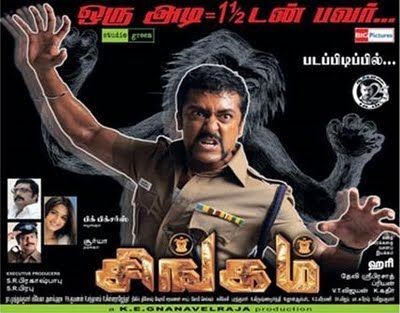
Maybe it was the heat and the 4-hour power cuts everyday, or perhaps the shortage of fuel and lack of diesel in the state, but Tamilnadu is in serious need of a hero. That is probably why every successful Tamil movie portrays a one-man-army as the protagonist, who ruthlessly kills corrupt officials to reinstate a fairer government run – of the people, by the people, and for the people.

Zooming Out and Zooming In

My arrival into Chennai was quite pleasant. I ended up sharing the last leg of my journey with a wonderful Tamil girl, who shared my passion for life and travel. Hopefully I can visit her in America once I return, and develop a real friendship. No matter how many flights I take, every time the plane takes off and lands, I feel excited and comforted by the promise of adventures that lie ahead. I especially enjoy watching the bird’s eye view of cities. Indian cities look very different from UAE and American cities when you zoom out.

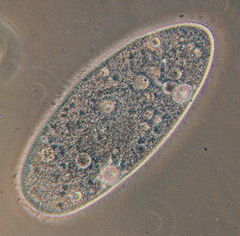
Chennai city has wavy crisscrossing roads, houses and buildings appear scattered with no real city plan.Temple goburams arise high above around with trails of wavering roads are lined with houses in random succession. It looks like protozoa or a cell with a bounded outer layer but with ‘a lot’ happening within its walls.

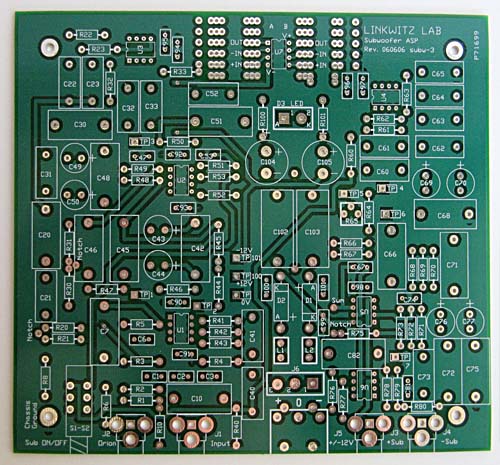
Dubai on the other hand looks like a circuit board with neat rows and columns dotted with buildings and straight roads. Since the city has grown fully only in the recent years, its design also seems modern, like something out of the movie Tron. Whether I fly in during the day or at night, it still looks like a micro-chip or circuit board, with bulbs of buildings surrounded by neat boxes and rows, not connected to one another, but unique and enclosed within the larger city boundary.

Atlanta has higher and lower densities of buildings, well connected by large meandering roadways. The taller buildings are clustered around circles of greenery/ vast empty spaces and large chunks of rows of suburban homes. But the city itself seems to have layers of skeletal structure, networks of roadways and neighborhoods in neat rows and columns, like a graph sheet.

I wonder if this analogy could also apply to the cities when I zoom in.

Chennai is much like a single-cell of an animal, there is a large outer boundary that defines the city limits, but the structure that is inside has no obvious grid like plane. Unicellular organisms also have no skeletal structure.  The buildings seem to have organically emerged in their respective areas, each performing a function and each linking themselves to some key city centers – such as the temple goburam, or a river.  The goburams could be seen as the nucleus and the rivers and meandering roadways as the various sub-clusters, placed randomly, but performing circulation and digestion within the cell. Chennai may not seem as efficient as the protozoa, but it does get the job done, even with a few digestive problems along the way!

Dubai does seem to look and run like a circuit board upon closer inspection. The city is cosmopolitan, but completely governed by Islamic law, this provides an outer structure and function to the circuit board –neatness to the chaos. Being one the largest and important trading hubs of the world, it functions like a circuit board too, connecting the various important components/ cities of the larger system. Individual units (flat copper etches and conductive pathways) are isolated. The larger wiring (in this case the city’s logistics) connects these seemingly disparate parts together. Islam and Dubai’s useful location are the large wiring networks that conduct and aid the unique copper etches of immigrant societies to function together, while they may never have to live near each other (British immigrants living in Jumeirah, Indian immigrants in BurDubai, Phillipino immigrants in Karama… etc in Dubai, reside in their respective neighborhoods).

Atlanta is a little harder to describe, mostly because I haven’t lived there long enough. But from what I gather, Atlanta has a lot of history, much like  fabric, that undergirds the city. The box like checks seems to over-lay each other, showing the transitory history of the city’s plan. Every few decades the city seems to reorganize itself, but the past remains like lighter graphs underneath the new, fresh, visible lines, each shifting the original locations slightly. For example, during the Atlanta Olympics, my friend Chipo mentioned to me that part of downtown and its surrounding areas where revamped and converted into posh neighborhoods. Other friends have told me of parts of the city that once looked like a ghetto, but where re-organized and now have million-dollar homes. When you zoom out, you can see the fading lines of the graphs that lie under the fresh new graph sheets, exactly like the Scottish checkered fabric.

Even 50 years ago the average human didn’t travel as much as they do today. Privileged men seem to have made their journey on ships out of curiosity and conquest throughout history, but today even a student like me (living just above the povertyline in America) can still make it halfway across the globe and back and avail of a unique perspective. My friend Kelsey always told me that human beings look up to the sky and wonder, think of god and our purpose in life. I think perhaps it is also time to look down at the earth and wonder, who are we are and what have we become?

If you have any interesting analogies to compare the cities you have seen in your travels, do share!