The main reason pilgrims visit Tirupati is to see the SriBalaji Temple (Tirupati Tirumala Devasthanam TTD) here, where Srinivasa (Vishnu) himself is said to live. Nestled atop seven hills and hence called “Lord of the Seven Hills” (yezh malai swami), I was able to visit the temple even though I didn’t know if I would have time to do so. Visiting Balaji is no ordinary task and takes stamina and piety. Pilgrims come here in the same way they gather at the famous Jagannath Temple. Getting “darshanam” at this temple is absolves one’s sins and Balaji is said to provide prosperity and wealth to those who visit.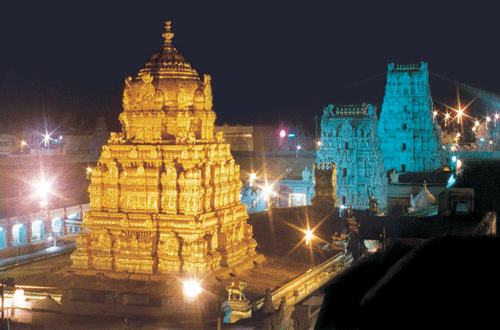
Going to a temple is a journey, and this journey is especially evident in visiting large and popular temples like TTD. Today areas where large numbers of people gather are vulnerable to terrorist attacks and so also security has increased and no cameras or cell phones are allowed in the area. Entering TTD was a lot like going through security in an airport. I left a lot my belongings in a luggage deposit center and entered with a bottle of water around 1:00pm to the special VIP entrance. Yes, this is surprising to me and to a family of seven who had come from Kolkota to see this temple for the first time. Unfamiliar to South-Indian temples they asked me why there wasn’t one line for devotees but three tiers. This isn’t unique to TTD. In most popular south Indian temples, except for in smaller shrines, tiered access gives you a lesser wait time. But even within VIP status there was a higher tier for the VVIPs. The free darshanam line began about a mile away from the temple entrance. The actual shrine is much further inside the temple grounds. The Rs.50 line and the Rs.300 line began at the same place, about half a mile from the entrance of the temple. The VVIPs were in the shortest line, one that led straight from the entrance of the main shrine inside. The wait time between Rs.50 and Rs.300 was only about 1 hour. The total wait was about 4 hours. I was able to visit Balaji only at 7:00pm that evening. After the darshanam it took another 2 hours to find my way out of the temple complex. This was not a special festival time but just a usual Thursday evening puja.
What was shocking to me is the amount of devotees who were in the VIP Rs.300 line was as many as those in the Rs.50 or free darshanam line. So India’s middle class can actually afford the entrance fees? These tiers also tell one of the different income levels of Indians today. The free darshanam pilgrims are still the bottom most rung of society. The Rs.50 devotees form a lower middle class. The Rs.300 could be considered middle class and upper middle class while the most expensive darshanam rates were not even published anywhere, there was a select few that made their way directly into the shrine for a hefty sum. Since Balaji bestows wealth to whoever donates to him, devotees also consider it a small price to pay. Moreover, the people in line with me also had packets of Rs.10,000 and larger sums to donate to Balaji. The wealth in India is very apparent and also visibly demarcating. Wealth buys you everything – devotion, health, and pride, that poverty doesn’t and it is so visible.
The ornamental step-like architecture of the temple’s design is said to show the path up to the heavens, the height indicating the wealth and prosperity of the temple and its honorary donating parties. Hierarchy is everywhere and visible here – human and divine and human-human.
 bommalāttum
Landscaping Cholanagaram « bommalāttum