My arrival into Chennai was quite pleasant. I ended up sharing the last leg of my journey with a wonderful Tamil girl, who shared my passion for life and travel. Hopefully I can visit her in America once I return, and develop a real friendship. No matter how many flights I take, every time the plane takes off and lands, I feel excited and comforted by the promise of adventures that lie ahead. I especially enjoy watching the bird’s eye view of cities. Indian cities look very different from UAE and American cities when you zoom out.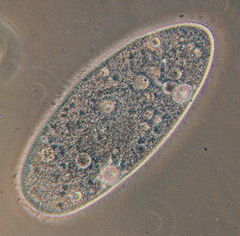
Chennai city has wavy crisscrossing roads, houses and buildings appear scattered with no real city plan.Temple goburams arise high above around with trails of wavering roads are lined with houses in random succession. It looks like protozoa or a cell with a bounded outer layer but with ‘a lot’ happening within its walls.
Dubai on the other hand looks like a circuit board with neat rows and columns dotted with buildings and straight roads. Since the city has grown fully only in the recent years, its design also seems modern, like something out of the movie Tron. 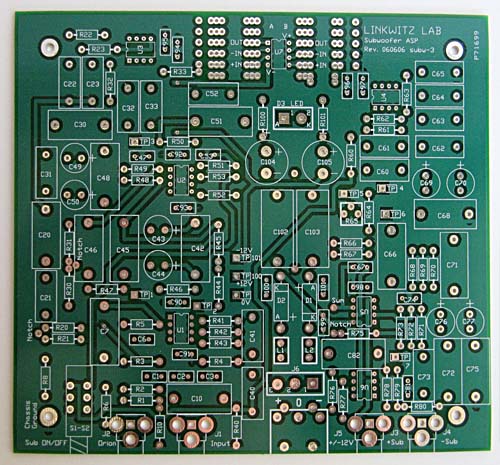 Whether I fly in during the day or at night, it still looks like a micro-chip or circuit board, with bulbs of buildings surrounded by neat boxes and rows, not connected to one another, but unique and enclosed within the larger city boundary.
Atlanta has higher and lower densities of buildings, well connected by large meandering roadways. The taller buildings are clustered around circles of greenery/ vast empty spaces and large chunks of rows of suburban homes. 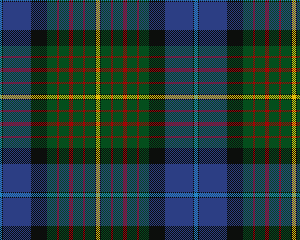 But the city itself seems to have layers of skeletal structure, networks of roadways and neighborhoods in neat rows and columns, like a graph sheet.
I wonder if this analogy could also apply to the cities when I zoom in.
Chennai is much like a single-cell of an animal, there is a large outer boundary that defines the city limits, but the structure that is inside has no obvious grid like plane. Unicellular organisms also have no skeletal structure. The buildings seem to have organically emerged in their respective areas, each performing a function and each linking themselves to some key city centers – such as the temple goburam, or a river. The goburams could be seen as the nucleus and the rivers and meandering roadways as the various sub-clusters, placed randomly, but performing circulation and digestion within the cell. Chennai may not seem as efficient as the protozoa, but it does get the job done, even with a few digestive problems along the way!
Dubai does seem to look and run like a circuit board upon closer inspection. The city is cosmopolitan, but completely governed by Islamic law, this provides an outer structure and function to the circuit board –neatness to the chaos. Being one the largest and important trading hubs of the world, it functions like a circuit board too, connecting the various important components/ cities of the larger system. Individual units (flat copper etches and conductive pathways) are isolated. The larger wiring (in this case the city’s logistics) connects these seemingly disparate parts together. Islam and Dubai’s useful location are the large wiring networks that conduct and aid the unique copper etches of immigrant societies to function together, while they may never have to live near each other (British immigrants living in Jumeirah, Indian immigrants in BurDubai, Phillipino immigrants in Karama… etc in Dubai, reside in their respective neighborhoods).
Atlanta is a little harder to describe, mostly because I haven’t lived there long enough. But from what I gather, Atlanta has a lot of history, much like fabric, that undergirds the city. The box like checks seems to over-lay each other, showing the transitory history of the city’s plan. Every few decades the city seems to reorganize itself, but the past remains like lighter graphs underneath the new, fresh, visible lines, each shifting the original locations slightly. For example, during the Atlanta Olympics, my friend Chipo mentioned to me that part of downtown and its surrounding areas where revamped and converted into posh neighborhoods. Other friends have told me of parts of the city that once looked like a ghetto, but where re-organized and now have million-dollar homes. When you zoom out, you can see the fading lines of the graphs that lie under the fresh new graph sheets, exactly like the Scottish checkered fabric.
Even 50 years ago the average human didn’t travel as much as they do today. Privileged men seem to have made their journey on ships out of curiosity and conquest throughout history, but today even a student like me (living just above the povertyline in America) can still make it halfway across the globe and back and avail of a unique perspective. My friend Kelsey always told me that human beings look up to the sky and wonder, think of god and our purpose in life. I think perhaps it is also time to look down at the earth and wonder, who are we are and what have we become?
If you have any interesting analogies to compare the cities you have seen in your travels, do share!
 bommalāttum
So true. Love it.